
- Dropshipping automation uses software tools to handle repetitive tasks like order forwarding, inventory syncing, price updates, and shipment tracking — eliminating manual work across your entire fulfillment pipeline.
- Fully automated stores can process hundreds of daily orders without human intervention, reducing errors by up to 90% and freeing 15–25 hours per week for growth-focused activities.
- The core workflows to automate first are inventory synchronization, order routing, pricing rules, and tracking updates — in that priority order.
- Automation ROI compounds over time: early-stage sellers save time, mid-stage sellers reduce costly overselling errors, and scaled sellers unlock true hands-off operations.
- Dropified provides end-to-end dropshipping automation with one-click product imports, automated order fulfillment, and real-time inventory sync across multiple suppliers and sales channels.
What Is Dropshipping Automation?
Dropshipping automation is the practice of using software to execute the repetitive operational tasks required to run a dropshipping business — without manual intervention. This includes listing products, syncing inventory levels, forwarding orders to suppliers, updating tracking numbers, and adjusting pricing rules.
Think of it as replacing the copy-paste workflow with an intelligent system that handles the entire order lifecycle automatically. As API2Cart explains, without automation, retailers find themselves manually updating stock levels, copying order details, and tediously entering tracking numbers — tasks that limit scalability and introduce costly errors.
The distinction matters: traditional dropshipping still requires a human operator at nearly every step. Automated dropshipping removes that bottleneck entirely.
💡 Dropified Insight: Dropified's one-click product import and automated order fulfillment engine handles the two most time-consuming manual tasks in dropshipping — product sourcing and order processing. Instead of copying product details from AliExpress or CJ Dropshipping manually, Dropified imports full product listings (images, descriptions, variants) in seconds and automatically forwards new orders to your supplier the moment a customer checks out.

The 5 Core Workflows You Must Automate First
Not all automation is created equal. Prioritize these five workflows in order of impact:
1. Inventory Synchronization
This is the foundation. Out-of-stock products that remain listed create overselling — the single most damaging operational error in dropshipping. Automated inventory sync pulls real-time stock data from your supplier's feed (CSV, API, or hosted file) and updates your store listings automatically.
According to Flxpoint's automation framework, established suppliers typically provide inventory feeds updated hourly via cloud platforms like Dropbox or FTP. Your automation tool should connect to these feeds and adjust product availability without any manual checks.
2. Order Routing and Fulfillment
Every new order should be automatically forwarded to the correct supplier with the right product details, shipping address, and fulfillment instructions. This eliminates the daily grind of manually placing orders on supplier websites.
3. Pricing Rule Automation
Set markup formulas, rounding rules, and competitive pricing adjustments that apply automatically across your entire catalog. When supplier costs change, your retail prices adjust instantly.
4. Tracking Number Updates
Once a supplier ships an order, the tracking number should flow back to your store and trigger a customer notification — automatically. This single workflow eliminates hours of weekly data entry.
5. Product Listing Management
Bulk import, edit, and publish products across multiple sales channels from a single dashboard. Automation tools handle image optimization, description formatting, and variant mapping.

Why Manual Dropshipping Fails at Scale
Here is the math that every manual dropshipper eventually confronts:
- 10 orders/day: Manageable manually (~2 hours of processing)
- 50 orders/day: Requires a virtual assistant (~$500–$1,200/month)
- 200+ orders/day: Physically impossible without automation
Manual processes introduce compounding failure points. Yaballe's research highlights that the entire customer journey — from listing products to ensuring fulfillment — involves operational tasks at every step, and most of these can be fully automated with the right tools.
The hidden cost of manual operations is not just time. It is error rate. Manual order entry averages a 1–3% error rate. At 100 orders per day, that means 1–3 wrong shipments daily — each costing $15–$40 in returns, reshipping, and lost customer trust.

The Dropshipping Automation Maturity Model
Most guides list tools. Here is a framework competitors miss — the Automation Maturity Model that maps where you are and what to automate next:
Stage 1 — Manual Operations (0% automated) You copy-paste everything. Orders, tracking, inventory checks. You are the bottleneck.
Stage 2 — Basic Notifications (10–20% automated) You receive alerts for new orders and low stock but still act on them manually.
Stage 3 — Semi-Automated Fulfillment (40–50% automated) Orders auto-forward to suppliers, but you manually handle exceptions, returns, and inventory discrepancies.
Stage 4 — Rules-Based Automation (70–80% automated) Pricing rules, inventory thresholds, and routing logic handle most scenarios. You intervene only on flagged exceptions.
Stage 5 — Full Automation (90%+ automated) End-to-end processing with automated exception handling. Human involvement limited to strategic decisions, supplier negotiations, and marketing.
Most solo dropshippers plateau at Stage 2. The sellers who reach Stage 4 and beyond are the ones generating $10K–$50K+ monthly with fewer than 5 hours of weekly operational work.

How Dropified Powers End-to-End Automation
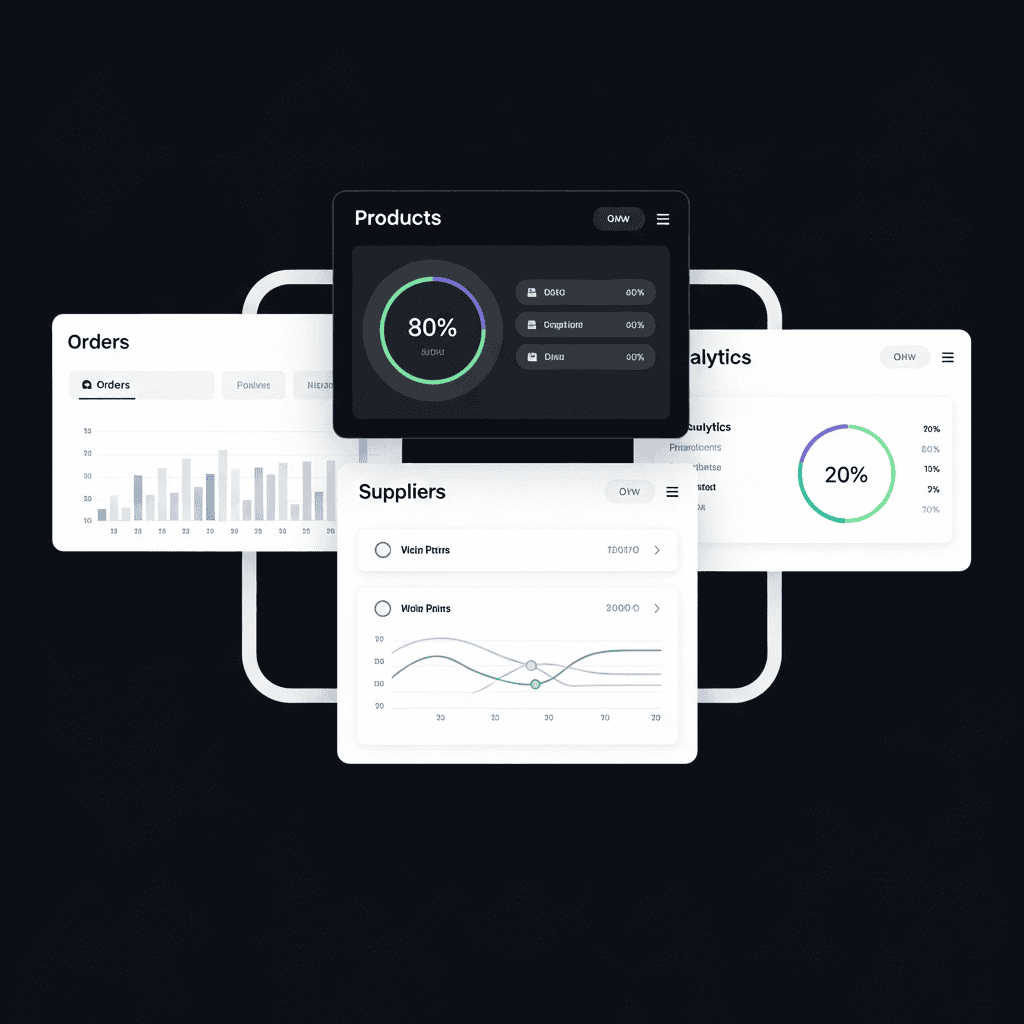
Dropified was built specifically to move dropshippers from Stage 1 to Stage 4 as fast as possible. Here is how each feature maps to the automation framework:
| Workflow | Manual Pain Point | Dropified Solution |
|---|---|---|
| Product Import | Copy-pasting listings for hours | One-click import from 75+ suppliers |
| Order Fulfillment | Manually placing orders on supplier sites | Auto-order with saved payment methods |
| Inventory Sync | Checking supplier stock manually | Real-time alerts and auto-updates |
| Price Management | Spreadsheet-based price calculations | Automated markup and pricing rules |
| Multi-Channel | Managing separate dashboards per platform | Unified dashboard for Shopify, WooCommerce, and more |
This is not theoretical. Dropified processes these workflows simultaneously, allowing sellers to manage catalogs of 500+ products across multiple stores without additional staff.
Measuring Your Automation ROI
Automation is an investment. Here is how to calculate whether it is working:
Time Savings Formula: Hours saved per week × your hourly rate = direct labor savings
Error Reduction Value: (Previous error rate – current error rate) × average orders × cost per error = savings from accuracy
Scalability Multiplier: Revenue increase enabled by handling more orders without proportional cost increases
Research from Branvas confirms that automation ROI comes from three primary areas: time savings, error reduction, and scalability. The sellers who track all three metrics — not just time saved — see the clearest picture of their return.
A realistic benchmark: sellers spending $30–$100/month on automation tools typically recover that investment within the first week through time savings alone.

Common Automation Mistakes to Avoid
Even with the right tools, these pitfalls derail dropshipping automation:
- Automating before standardizing — If your product data is messy, automation amplifies the mess. Clean your catalog first.
- Ignoring exception handling — Automation handles the 90%. You need a clear process for the 10% (out-of-stock items, address errors, supplier delays).
- Over-automating customer communication — Transactional emails (order confirmation, shipping updates) should be automated. Customer service responses should not be fully automated — personalization still matters.
- Skipping supplier vetting — Automation only works if your suppliers reliably fulfill orders. A fast automated workflow connected to a slow, unreliable supplier still results in poor customer experience.
- Set-and-forget mentality — Review your automation rules monthly. Supplier pricing changes, shipping times shift, and seasonal demand fluctuates.
Your Dropshipping Automation Action Plan
Here is exactly what to do this week:
- Audit your current workflows — List every manual task you perform daily and estimate time spent on each.
- Prioritize by impact — Start with inventory sync and order fulfillment. These deliver the fastest ROI.
- Start your free Dropified trial — Connect your store, import your first products with one click, and experience automated order fulfillment firsthand.
- Set pricing rules — Configure your markup formulas so pricing adjusts automatically when supplier costs change.
- Monitor and optimize — Track your time savings and error rates weekly for the first month to quantify your automation ROI.
Dropshipping automation is not a luxury reserved for high-volume sellers. It is the operational foundation that makes scaling possible in 2026. The sellers who automate early compound their advantage with every order processed.
Start your free Dropified trial today and move from manual operations to automated growth.
Essential Dropified Resources & Training
- How To Find Dropshipping Suppliers
- How To Master eBay Dropshipping
- Getting Started with High-Ticket Dropshipping
- The Best Software Tools for Working Remotely
✨ Want an AI Summary of this article?