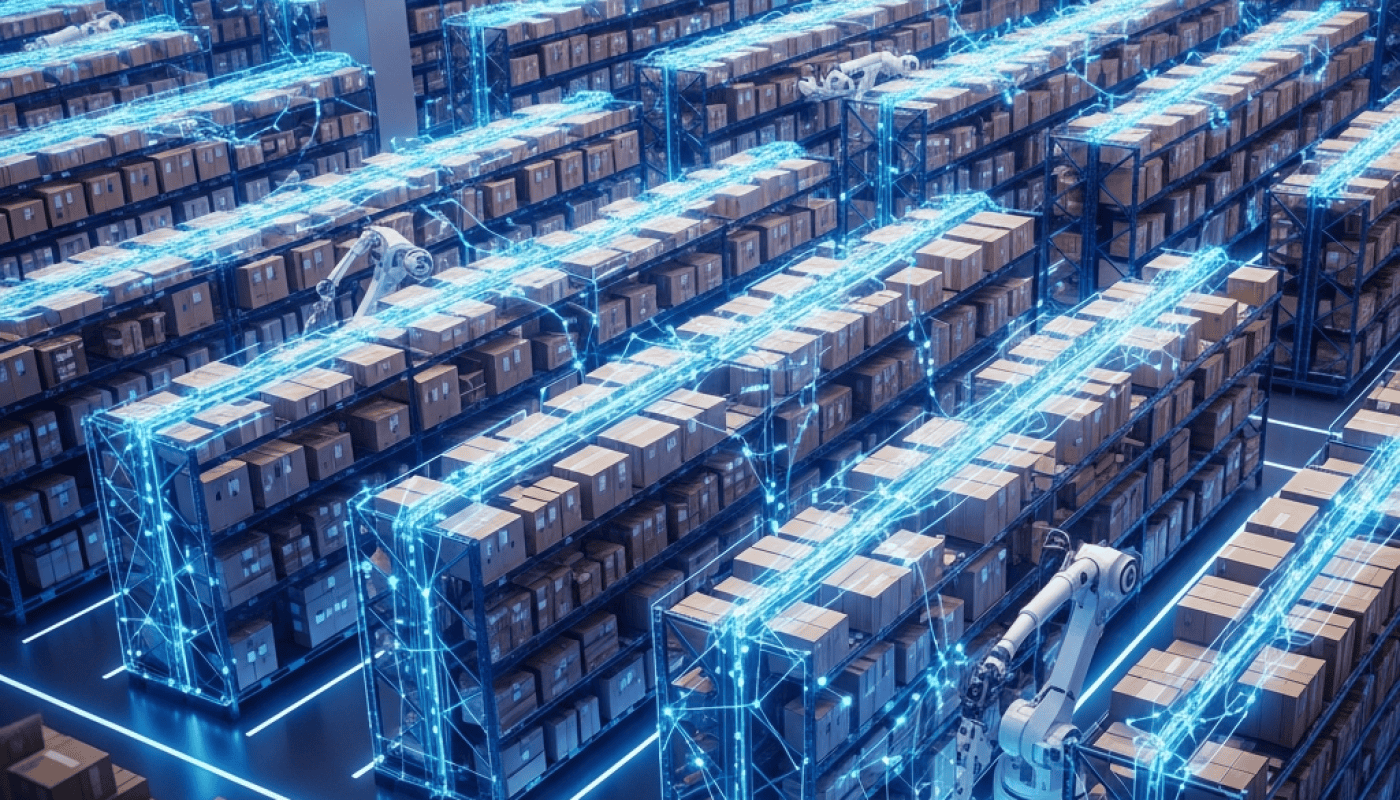
- AI agents can autonomously reorder inventory by monitoring real-time sales data, supplier lead times, and demand signals — then triggering purchase orders without human intervention.
- Self-healing supply chains use agentic AI to detect disruptions like stockouts or shipping delays and automatically reroute, reorder, or substitute products within minutes.
- Dropshipping sellers benefit most from AI-driven restocking because they operate with zero warehouse overhead, making automated supplier switching and reordering a competitive advantage.
- The technology is production-ready in 2026 — Microsoft, Databricks, and major enterprise platforms now offer AI agent frameworks specifically built for inventory-to-delivery automation.
- Small e-commerce operators can access these capabilities today through platforms like Dropified that integrate automated order fulfillment and supplier management into a single dashboard.
What Are Self-Healing Supply Chains?
A self-healing supply chain is an automated system that detects disruptions — stockouts, supplier failures, demand spikes — and corrects them without waiting for a human to intervene. Instead of a warehouse manager manually checking inventory levels and placing reorders, AI agents handle the entire loop: monitor, decide, act.
According to EY's research on agentic AI in supply chains, these systems dynamically monitor inventory levels by analyzing real-time sales trends, seasonality, and market conditions. They adjust stock levels and automate replenishment, reducing manual intervention and minimizing human error.
For dropshipping sellers, this concept matters even more. You don't hold inventory. Your entire business depends on suppliers having stock when your customers order. A self-healing supply chain means your store automatically adapts when a supplier runs dry — switching sources, adjusting listings, or pausing ads before you lose money.
💡 Dropified Insight: Dropified's automated order fulfillment and one-click product import already function as the foundation of a self-healing supply chain for dropshippers. When a supplier's stock drops or prices shift, Dropified users can manage multiple supplier sources per product — giving you a built-in fallback system that keeps orders flowing without manual monitoring. Pair this with Dropified's drop shipping management tools to build resilience into your store from day one.

How AI Agents Reorder Inventory Automatically
AI agents in supply chain management aren't simple rule-based bots. They're autonomous decision-makers that operate across three critical layers:
Sensing and Monitoring
The agent continuously ingests data from multiple sources:
- Point-of-sale velocity — how fast products sell hour by hour
- Supplier lead times — real-time shipping estimates from each vendor
- External signals — weather, social media trends, competitor pricing
- Inventory position — current stock levels across all channels
Automation Anywhere reports that machine learning-powered agents analyze vast amounts of this data in real time, detect patterns, and proactively make decisions — optimizing inventory levels, demand forecasting, and route planning simultaneously.
Decision and Action
Once the agent identifies a trigger condition (stock dropping below a dynamic threshold, a demand spike from a viral product), it executes:
- Calculates optimal reorder quantity based on demand forecast and supplier MOQs
- Selects the best supplier considering price, reliability score, and shipping speed
- Places the purchase order automatically through integrated APIs
- Updates your storefront — adjusting delivery estimates or pausing listings if needed
Learning and Adapting
Every reorder cycle feeds back into the model. The agent gets smarter about your specific business patterns — learning that your profitable niche products spike every Friday evening or that a particular AliExpress supplier consistently ships two days late.
Why 2026 Is the Tipping Point for AI-Driven Inventory Management
This isn't speculative technology. Microsoft launched its Warehouse Advisor Agent in early 2026, using machine learning and predictive analytics to automate slotting, inventory consolidation, and cycle counting for Dynamics 365 users. Databricks has published frameworks for multi-agent supply chain collaboration where supply chain agents work alongside demand planning and production agents in real time.
Three factors are converging right now:
- LLM costs dropped 90%+ since 2024 — making always-on AI agents economically viable for small businesses, not just enterprise
- API-first supplier platforms — AliExpress, CJ Dropshipping, and other major suppliers now offer robust APIs that AI agents can interact with programmatically
- Multi-agent orchestration frameworks — tools that let multiple specialized agents (pricing, inventory, fulfillment) coordinate without human supervision
For dropshippers running lean operations, this means the gap between enterprise-grade supply chain automation and what a solo operator can achieve is closing fast.
The Dropshipper's Self-Healing Playbook: Practical Steps
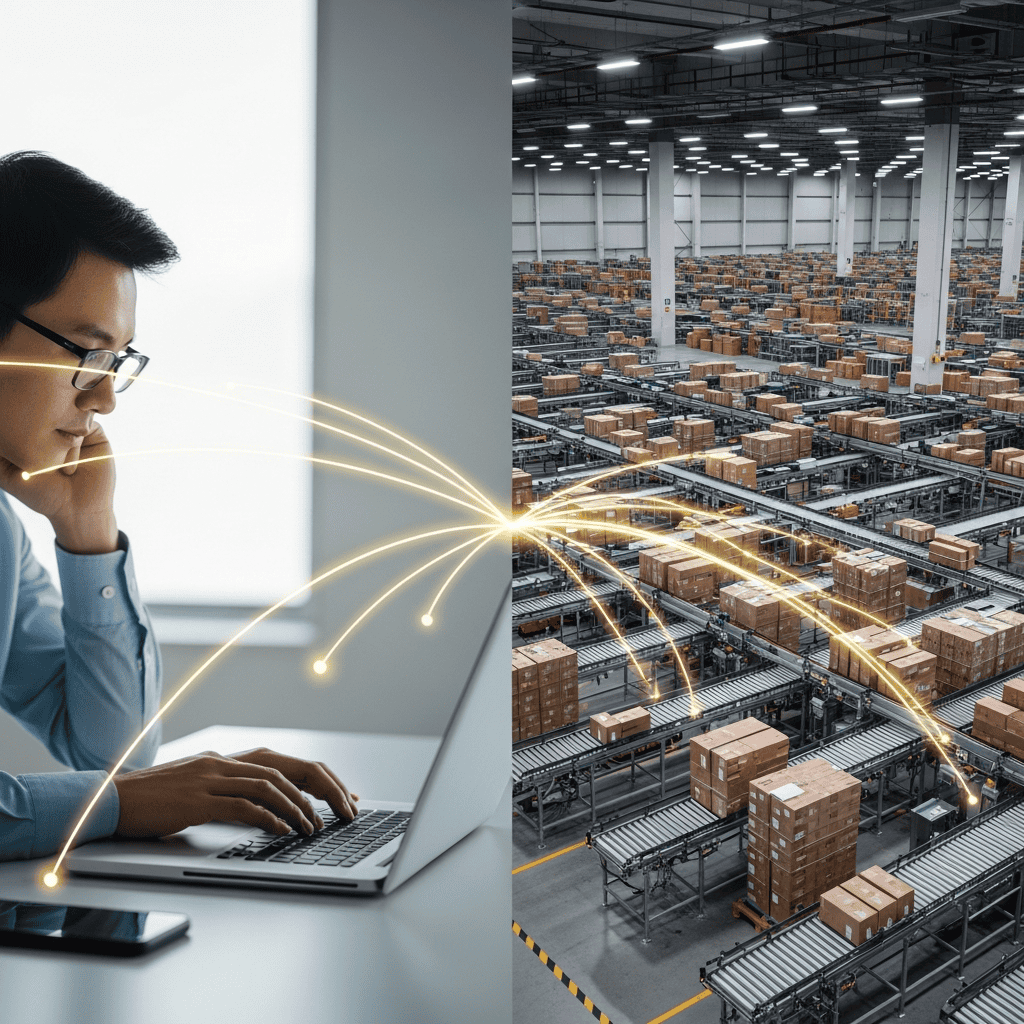
You don't need to build custom AI from scratch. Here's how to start building self-healing capabilities into your dropshipping business today:
Step 1: Establish Multi-Supplier Redundancy
Every product in your store should have at least two vetted suppliers. When you research winning products, evaluate supplier depth simultaneously. Dropified lets you map multiple suppliers to a single product listing, creating the redundancy layer that self-healing depends on.
Step 2: Set Dynamic Reorder Triggers
Move beyond static “reorder at 10 units” thresholds. Factor in:
- Current daily sales velocity
- Supplier average fulfillment time
- Upcoming promotional events or seasonal trends
- Day-of-week sales patterns specific to your chosen niche
Step 3: Automate Supplier Communication
As Infios research highlights, AI agents can direct tasks based on real-time order priority and optimize inventory placement dynamically. For dropshippers, this translates to automated supplier outreach — confirming stock availability before routing orders.
Step 4: Build Feedback Loops
Track every supplier interaction: fulfillment speed, defect rates, communication responsiveness. This data trains your decision-making over time, whether you're using formal AI tools or simply Dropified's built-in order tracking and product sourcing from AliExpress.
Information Gain: The “Resilience Score” Framework
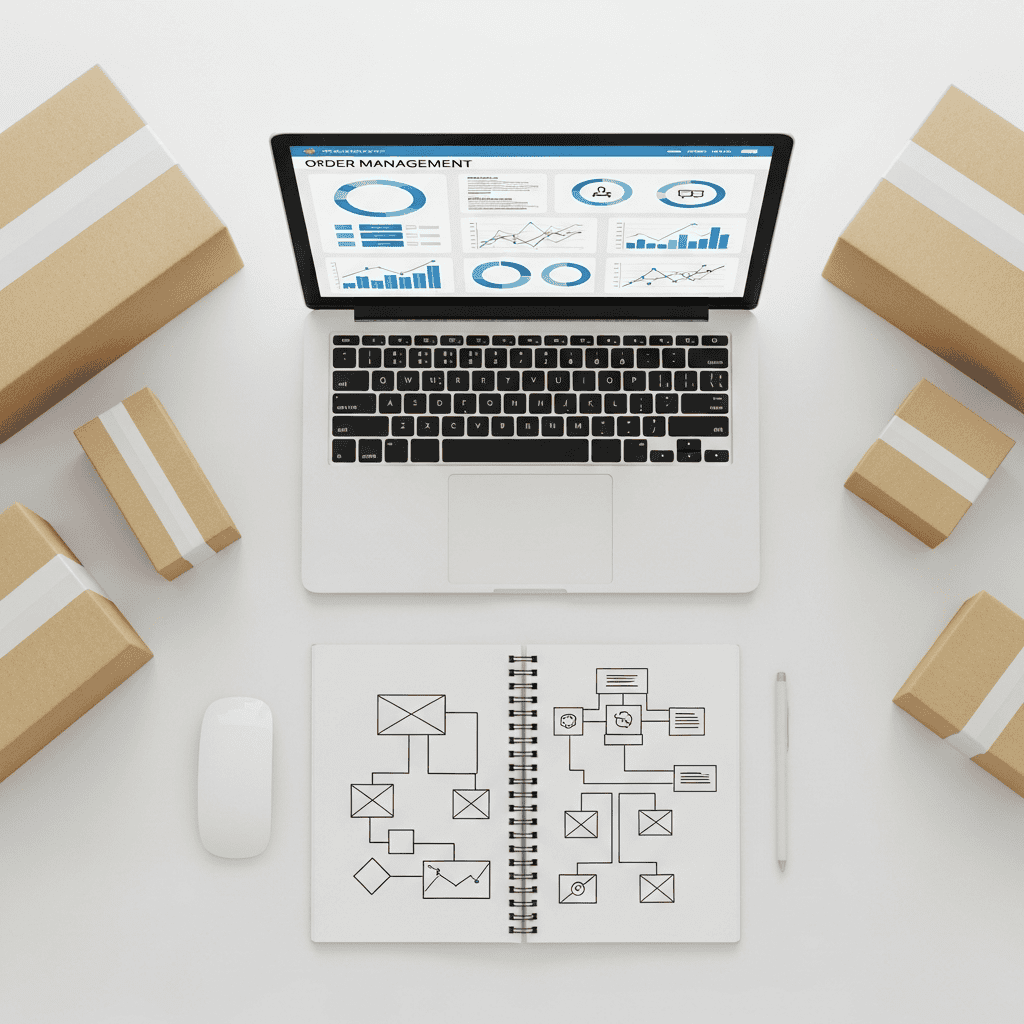
Here's something the top search results don't cover: a practical scoring method for evaluating how “self-healing” your supply chain actually is. Rate your operation on five dimensions (1-5 scale each):
| Dimension | What It Measures | Score 1 (Fragile) | Score 5 (Self-Healing) |
|---|---|---|---|
| Supplier Depth | Backup suppliers per product | Single source | 3+ vetted alternatives |
| Detection Speed | Time to identify a disruption | Days (manual checks) | Real-time automated alerts |
| Response Automation | How much human intervention is needed | Fully manual reorder | Autonomous agent reorder |
| Data Integration | Systems talking to each other | Spreadsheets and email | API-connected platforms |
| Learning Velocity | How fast you improve from failures | No tracking | ML-driven pattern updates |
A score of 15 or below means your supply chain is fragile. Most solo dropshippers score 8-12. Getting to 20+ is where AI agents and platforms like Dropified create exponential value — you stop firefighting and start scaling.
This framework helps you prioritize investments. If your supplier depth is a 1, no amount of AI sophistication will save you. Fix fundamentals first, then layer in automation.

Common Mistakes That Break Supply Chain Automation
Even with AI agents handling reorders, these fatal e-commerce errors can undermine your automation:
- Over-relying on a single supplier — AI can't fix a dependency it has no alternative for
- Ignoring lead time variability — average shipping times lie; model the variance
- Setting and forgetting — AI agents need updated business rules as your product catalog and revenue goals evolve
- Poor data hygiene — garbage SKU data, inconsistent naming, and duplicate listings confuse any automated system
- Not testing failure scenarios — simulate a supplier going offline and see if your system actually heals
What's Next: AI Agents Across Your Entire Store
Self-healing inventory is just one application. The same agentic AI architecture powers automated TikTok live streams, dynamic pricing, customer service bots, and predictive ad spend allocation. The sellers who win in 2026 and beyond will operate stores where AI agents handle the operational grind while humans focus on brand building and product curation.
Key Takeaways
Self-healing supply chains powered by AI agents aren't a future promise — they're a current reality reshaping how inventory gets managed across e-commerce. The core principle is simple: detect disruptions automatically, respond without human delay, and learn from every cycle.
For dropshippers, the barrier to entry has never been lower. Platforms like Dropified already provide the multi-supplier management, automated fulfillment, and product research infrastructure that forms the backbone of a resilient, self-healing operation.
Your next step: Start your free Dropified trial and map at least two suppliers to your top five products this week. That single action moves your Resilience Score from fragile to recoverable — and positions you to layer in full AI-driven reordering as these tools mature.
✨ Want an AI Summary of this article?