- Autonomous AI agents now handle multi-step e-commerce operations—inventory syncing, order routing, customer responses—that previously required dozens of Zapier zaps chained together.
- Replacing Zapier with AI agents for ecommerce cuts automation costs by 40-60% while eliminating the brittle “if-this-then-that” logic that breaks during peak sales periods.
- AI agents reason through context, make decisions on the fly, and self-correct errors—something trigger-based platforms like Zapier fundamentally cannot do.
- The shift from workflow automation to autonomous agents is the biggest operational upgrade e-commerce sellers can make in 2026, especially for dropshipping businesses managing multiple suppliers.
- You don't need a dev team to start—no-code AI agent builders now integrate directly with Shopify, WooCommerce, and major supplier platforms.
Why Zapier Falls Short for Modern E-Commerce Operations
Zapier was revolutionary in 2018. In 2026, it's a bottleneck.
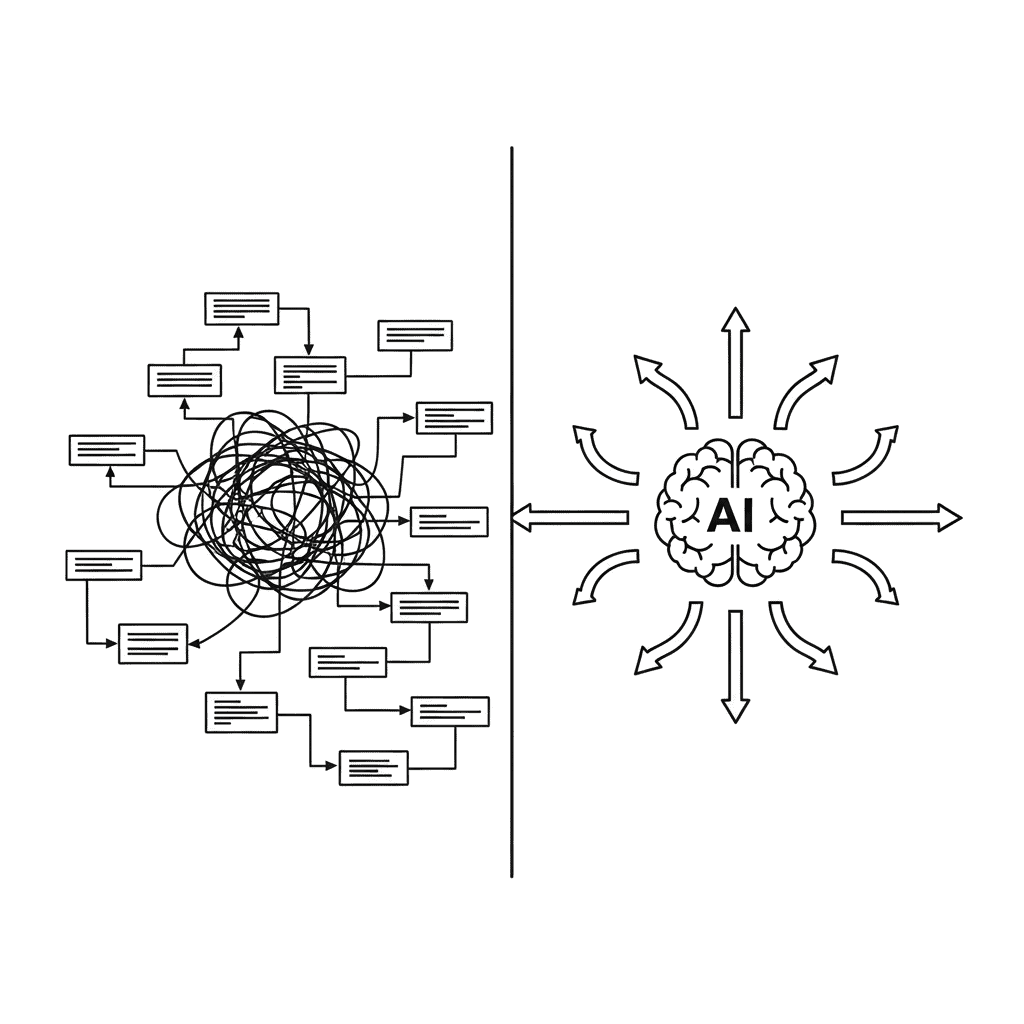
The core problem is architectural. Zapier operates on rigid trigger-action logic: when X happens, do Y. That works for simple tasks like sending a Slack notification when a new order arrives. It collapses when your e-commerce operation needs to make decisions based on context.
Consider a real scenario: a customer orders a product that's out of stock at your primary supplier but available at two alternates with different shipping times and costs. In Zapier, handling this requires 8-12 connected zaps, multiple filters, and constant maintenance. An AI agent evaluates all three suppliers, factors in the customer's location, checks margin thresholds, and routes the order—autonomously.
According to Stack AI's 2026 analysis, Zapier's AI capabilities remain “basic capabilities based on triggers and actions,” while purpose-built AI platforms offer native agents with knowledge bases and document analysis. That gap is only widening.
For dropshipping sellers managing profitable niches across multiple suppliers, this isn't a minor inconvenience—it's a revenue leak.
What Autonomous AI Agents Actually Do Differently
An AI agent isn't a smarter zap. It's a fundamentally different paradigm.
Traditional automation (Zapier, Make, Integrately): – Follows predefined rules – Breaks when inputs deviate from expected patterns – Requires manual updates when business logic changes – Scales linearly—more tasks mean more zaps and higher costs
Autonomous AI agents: – Reason through novel situations using context – Self-correct when errors occur – Learn from patterns in your operational data – Scale intelligently—handle more complexity without proportional cost increases
As Entrepreneur reported, a new generation of AI agents is “quietly replacing research teams, marketers and developers,” and solo entrepreneurs running e-commerce stores are among the first to benefit.
The practical difference shows up in three critical e-commerce workflows:
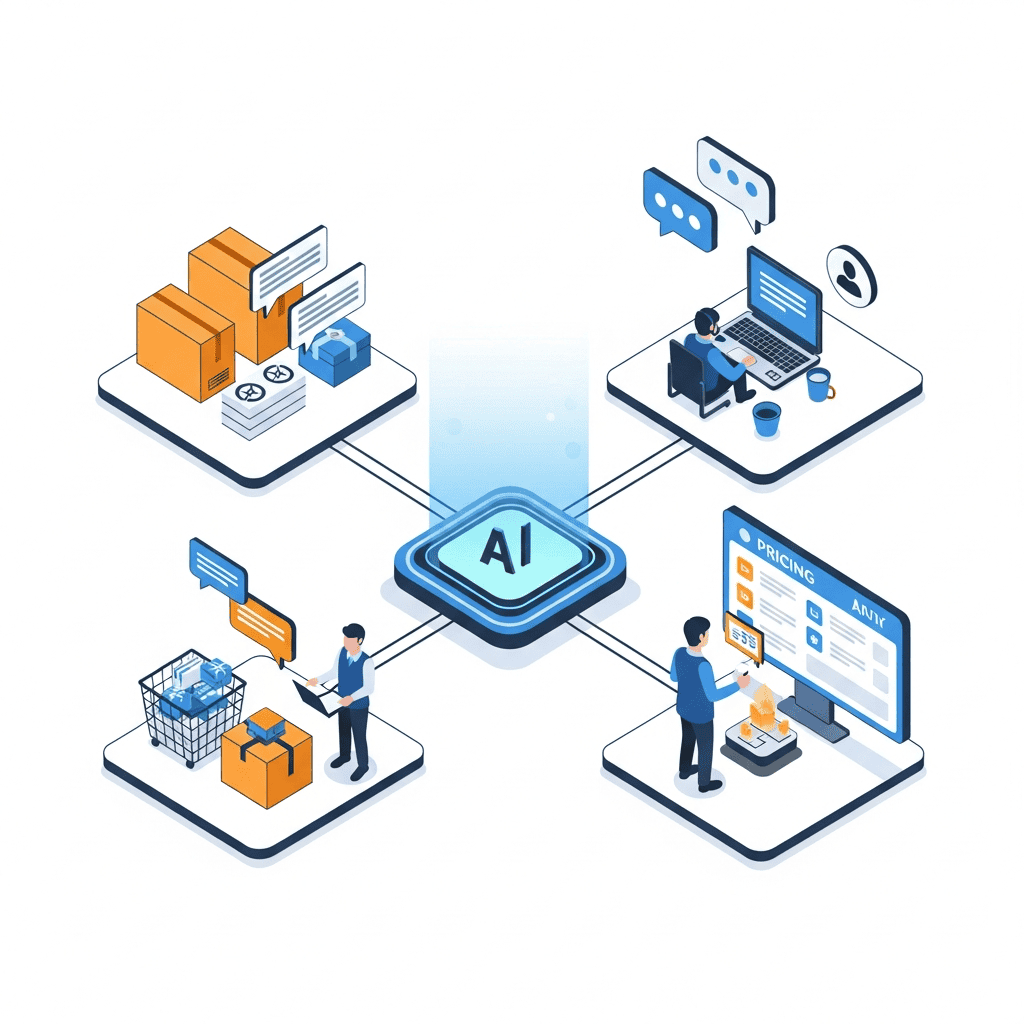
- Order fulfillment routing — Agents evaluate supplier availability, shipping costs, and delivery timelines in real time rather than following a static priority list.
- Customer service triage — Agents read intent, pull order history, and resolve issues (refunds, replacements, tracking) without human intervention for 70-80% of tickets.
- Inventory and pricing adjustments — Agents monitor competitor pricing and stock levels, then adjust your listings dynamically instead of waiting for a scheduled trigger.
The Real Cost of Staying on Zapier in 2026
Let's talk numbers.
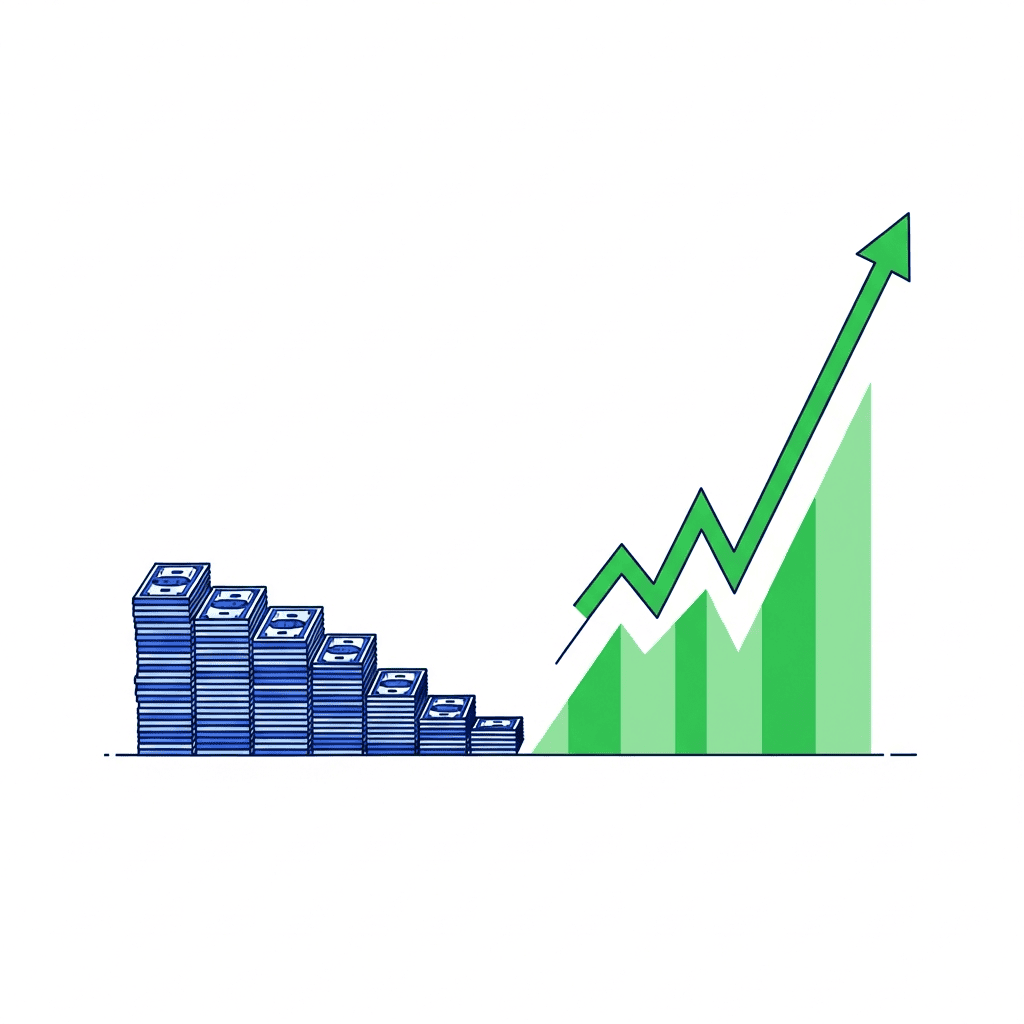
A mid-volume dropshipping store running 5,000 orders per month typically needs 15-25 active Zapier zaps to manage operations. At Zapier's current pricing, that's $150-$300/month for the plans that support multi-step zaps—and you'll burn through task limits fast during sales spikes.
The hidden cost is worse: maintenance time. Every platform update, API change, or new supplier integration requires manual zap rebuilding. Sellers report spending 6-10 hours monthly just keeping automations running.
AI agent platforms like Composio and Gumloop offer execution-based pricing that typically runs 30-50% lower for equivalent workloads, with the added benefit of handling edge cases that would break traditional automations entirely.
💡 Dropified Insight: Dropified's automated order fulfillment and one-click supplier import already eliminate several of the zaps most e-commerce sellers rely on. By combining Dropified's built-in automation with a lightweight AI agent layer for decision-making tasks like supplier routing and price optimization, you can replace your entire Zapier stack while keeping operations inside a single platform designed specifically for dropshipping in 2026.
How to Replace Zapier with AI Agents: A Step-by-Step Framework
You don't need to rip out everything overnight. Here's the migration framework that works for e-commerce operators at any scale.
Step 1: Audit Your Current Zap Stack
List every active zap and categorize each one:
- Simple transfers (data moves from A to B with no logic) — These can stay on basic automation or move into Dropified's native integrations.
- Rule-based routing (if/then logic with 2-3 conditions) — Prime candidates for AI agent replacement.
- Complex decision chains (multi-step zaps with filters, delays, and branching) — Replace these first. They're the ones most likely to break and most expensive to maintain.
Step 2: Choose Your Agent Platform
For e-commerce specifically, evaluate platforms on three criteria:
- Native integrations with your store platform (Shopify, WooCommerce, BigCommerce)
- Supplier API connectivity — Can agents communicate directly with AliExpress, CJ Dropshipping, or your private suppliers?
- No-code builder availability — MindStudio notes that no-code platforms let you build sophisticated AI workflows without writing code, which matters when your core skill is product selection, not engineering.
Step 3: Migrate in Priority Order
Start with your highest-friction workflows. For most dropshippers, that's:
- Order fulfillment and tracking sync
- Customer inquiry responses
- Product research and winning product identification
- Inventory level monitoring
- Price adjustment automation

The Workflows Where AI Agents Deliver the Biggest ROI
Not every automation needs an AI agent. Here's where the return is clearest.
Supplier Failover and Smart Routing
When your primary supplier runs out of stock on a high-profit-margin product, an AI agent queries alternate suppliers, compares landed costs (product + shipping + duties), checks delivery estimates against customer expectations, and routes the order—all within seconds. A Zapier equivalent would require pre-mapping every possible failover scenario manually.
Dynamic Repricing Based on Market Signals
AI agents monitor competitor pricing across marketplaces, factor in your margin floors, and adjust listings in real time. This is especially powerful for sellers in competitive categories identified through data-driven product research.
Predictive Inventory Alerts
Rather than triggering a notification when stock hits zero (too late), agents analyze sales velocity trends and alert you before stockouts occur—giving you time to secure supply or pause ads.
Common Mistakes When Migrating Off Zapier
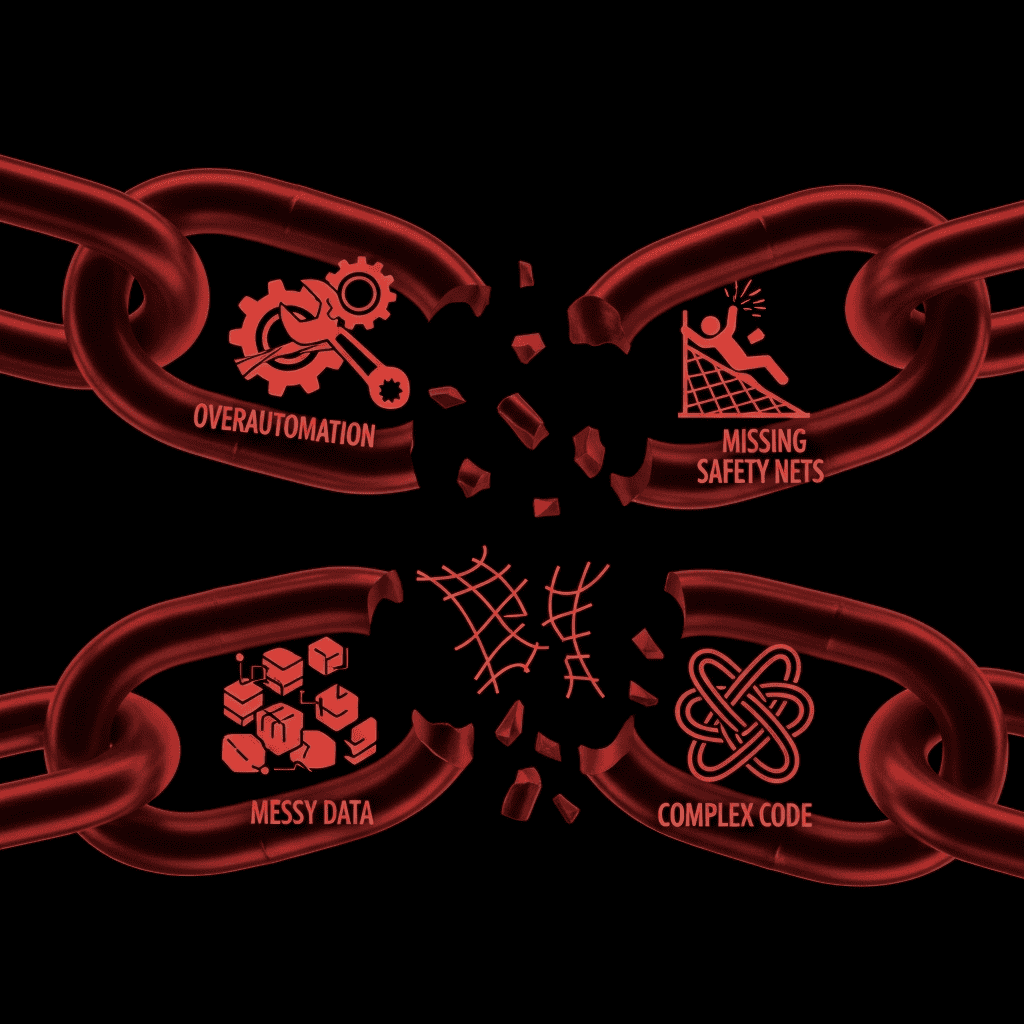
Mistake 1: Automating everything with agents. Simple data transfers don't need AI reasoning. Use native integrations (like Dropified's built-in connections) for straightforward tasks and reserve agents for decision-heavy workflows.
Mistake 2: No fallback logic. AI agents are powerful but not infallible. Always build human-in-the-loop checkpoints for high-stakes actions like bulk price changes or large refund approvals.
Mistake 3: Ignoring data hygiene. Agents are only as good as the data they access. Clean, standardized product data and consistent supplier formatting dramatically improve agent performance. If you're sourcing winning products across multiple channels, maintain consistent naming conventions and SKU structures.
Mistake 4: Trying to build custom agents from scratch. Unless you have dedicated engineering resources, start with no-code agent platforms that offer pre-built e-commerce templates. The build-vs-buy math almost always favors buying for stores under $1M annual revenue.
What This Shift Means for Dropshipping in 2026
The move from trigger-based automation to autonomous AI agents isn't optional for competitive e-commerce operators—it's the new baseline.
Sellers who adopted smart home gadgets and emerging niches early gained an edge through product selection. The next competitive advantage comes from operational intelligence: how fast and how smartly your back-end systems respond to real-time market conditions.
AI agents make sub-second decisions across supplier networks, pricing engines, and customer communications. That speed compounds. Over 12 months, an AI-optimized operation processes the same order volume with fewer errors, lower costs, and higher customer satisfaction scores than a Zapier-dependent competitor.
The tools exist today. The migration path is clear. The only question is whether you start now or play catch-up later.
Start Building Your AI-Powered E-Commerce Stack
Replace brittle zap chains with intelligent, autonomous workflows. Dropified gives you the foundation—automated fulfillment, one-click product imports, and supplier management built for dropshippers—so you can layer AI agents on top without rebuilding from zero.
Start your free Dropified trial and see how much of your Zapier stack becomes unnecessary on day one. Then explore AI agent platforms to handle the decision-making that no trigger-action tool was ever designed to do.
✨ Want an AI Summary of this article?