
- TikTok Shop analytics API data covers sales performance, video engagement, product conversion rates, and customer demographics — the four pillars every seller must track to scale profitably.
- The TikTok Shop API returns structured JSON fields including view count, share count, like count, comment count, region code, and revenue estimates that feed directly into custom dashboards.
- Sellers who actively analyze TikTok Shop API data outperform competitors by identifying trending products faster, optimizing creator partnerships with real engagement metrics, and cutting ad spend on underperforming SKUs.
- Third-party ETL tools and direct API integrations now automate data extraction from TikTok Shop's backend, eliminating manual reporting and enabling real-time decision-making for dropshipping businesses.
Why TikTok Shop Analytics API Data Is Non-Negotiable in 2026
TikTok Shop generated over $33 billion in global GMV in 2025, and the sellers capturing the largest share have one thing in common: they make decisions based on tiktok shop analytics api data, not gut instinct.
The difference between a store doing $5K/month and one doing $50K/month often comes down to which metrics they track, how frequently they pull data, and how quickly they act on what the numbers reveal. Tools like Kalodata, FastMoss, and Shoplus have built multi-million dollar businesses selling exactly this kind of data intelligence back to sellers.
This guide breaks down the exact metrics worth tracking, how to access them through the TikTok Shop API, and the frameworks that turn raw data into profitable action.
💡 Dropified Insight: Dropified's product research tools let you cross-reference TikTok Shop trending product data with supplier pricing and shipping times before you commit to listing. Instead of manually pulling API data and comparing it against AliExpress catalogs, Dropified centralizes that workflow — so you validate demand and margins in one dashboard.
The Four Metric Categories That Drive TikTok Shop Revenue
Not all data points carry equal weight. The TikTok Shop API exposes dozens of fields, but profitable sellers organize their analysis around four core categories.
Sales Performance Metrics
These are your revenue fundamentals:
- Gross Merchandise Value (GMV) — Total sales volume before returns and refunds
- Units sold per SKU — Identifies your top performers and dead inventory
- Average order value (AOV) — Tracks whether bundles and upsells are working
- Refund and return rates — Flags quality issues before they tank your seller rating
The API returns sales data at the product level, meaning you can track performance per individual listing rather than relying on store-wide averages that hide underperformers.
Engagement Metrics
The TikTok Research API provides granular engagement fields: view_count, like_count, comment_count, share_count, and music_id — all tied to specific video identifiers and timestamps.
For Shop sellers, the critical engagement ratios are:
- View-to-click rate — How many viewers actually tap on the product link
- Share-to-sale ratio — Measures virality that converts (not just vanity shares)
- Comment sentiment patterns — Positive purchase-intent comments (“where do I buy?”) vs. complaints

Conversion Metrics
This is where most sellers lose money — they drive traffic but fail to convert:
- Product page view-to-cart rate — Anything below 8% signals a listing problem
- Cart abandonment rate — Above 70% means pricing, shipping costs, or trust signals need work
- Checkout completion rate — The final friction point before revenue hits your account
Customer Demographics
The API exposes region_code and behavioral data that reveal who is buying, not just what they're buying. Sellers who segment by demographics can tailor product descriptions, pricing, and creator partnerships to their highest-value audience segments.
How to Access and Structure TikTok Shop API Data
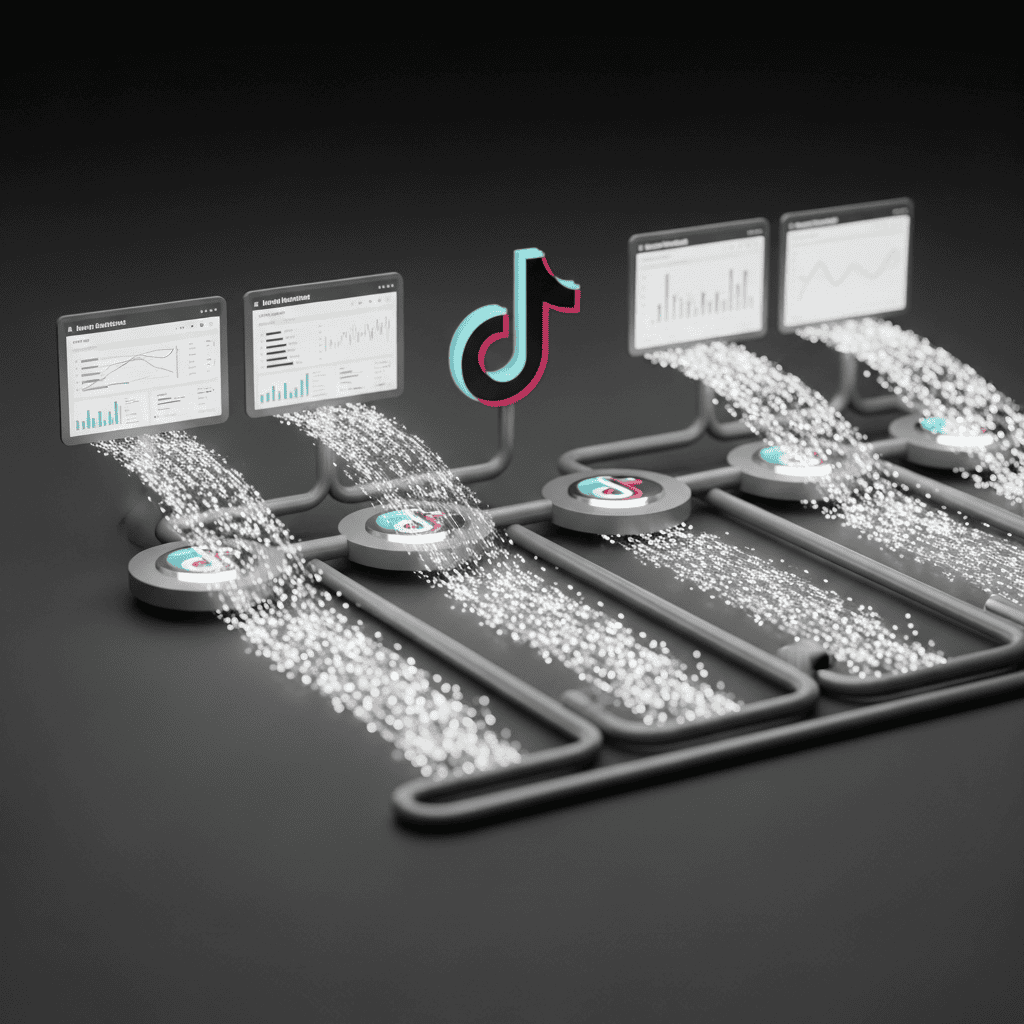
There are three primary approaches to pulling TikTok Shop analytics API data, each with different trade-offs.
Direct API Integration
TikTok's official Business API provides endpoints for ad campaign management, commercial content queries, and shop analytics. You'll need:
- A registered TikTok developer account
- API credentials (app ID and secret)
- Rate limit management (TikTok throttles requests aggressively)
The advantage is real-time access with zero middleman costs. The disadvantage is significant engineering overhead to build and maintain.
ETL Tools and Data Connectors
Platforms like Saras Daton connect directly to TikTok Shop's backend and automate extraction into your existing analytics stack. This approach works best for sellers who already use tools like Google BigQuery, Snowflake, or Looker.
Key benefits of the ETL approach:
- Automated daily/hourly data pulls
- Pre-built data transformations
- Historical data warehousing for trend analysis
- No custom code required
Third-Party Analytics Platforms
Services like Kalodata and FastMoss aggregate TikTok Shop data across millions of products and shops, providing competitive intelligence without any API setup. These platforms charge $50–$300/month but save hundreds of engineering hours.

The Information-Gain Framework: Metrics Your Competitors Ignore
Here's what the top 10 search results for TikTok Shop analytics don't tell you: the most profitable metric isn't any single data point — it's the velocity delta between related metrics.
The Velocity Delta Method
Track these three velocity relationships weekly:
-
GMV velocity vs. engagement velocity — If your sales growth outpaces engagement growth, you're riding paid traffic that will become unprofitable. Sustainable stores maintain a 1:1.2 ratio (engagement slightly outpacing sales).
-
New customer velocity vs. refund velocity — A rising refund rate that's accelerating faster than new customer acquisition signals a product quality crisis within 2-3 weeks.
-
Creator content velocity vs. organic reach velocity — When you're producing more creator content but organic reach is flat or declining, your content-market fit has degraded. Time to refresh creatives or pivot products.
No third-party tool surfaces these velocity relationships automatically. You need to calculate them from raw API data, which is exactly why direct data access matters.
Building a Custom Scoring Model
Assign weighted scores to your top 8-10 metrics and create a composite “Product Health Score” for each SKU:
| Metric | Weight | Why It Matters |
|---|---|---|
| Units sold (7-day) | 25% | Revenue driver |
| View-to-cart rate | 20% | Content effectiveness |
| Refund rate | 20% | Quality signal (inverse) |
| Share-to-sale ratio | 15% | Organic growth potential |
| AOV trend | 10% | Margin health |
| Comment sentiment | 10% | Early warning system |
Products scoring below 60/100 get flagged for review. Products above 80/100 get increased ad budget. This removes emotion from inventory decisions.

Turning API Data Into Daily Action
Raw data is worthless without a decision framework. Here's the daily operating rhythm top TikTok Shop sellers follow:
Morning (15 minutes): – Pull overnight sales data and flag any SKU with a >5% refund spike – Check engagement velocity on creator content posted in the last 24 hours – Review new product trending signals from competitive API data
Midday (10 minutes): – Adjust ad spend based on morning conversion data – Pause underperforming creatives (view-to-click rate below 2%) – Greenlight reorders for fast-moving inventory
Evening (10 minutes): – Log daily composite scores for all active SKUs – Compare weekly velocity deltas – Queue product research for any gaps identified in competitor data
This 35-minute daily habit, powered by structured API data, replaces hours of manual dashboard-checking and emotional decision-making.
Conclusion: Data-Driven Sellers Win on TikTok Shop
The TikTok Shop analytics API data ecosystem in 2026 gives every seller — from solo dropshippers to scaled brands — access to the same raw intelligence. The competitive advantage lies in which metrics you prioritize, how you structure velocity relationships between them, and how fast you act.
Key takeaways:
- Focus on the four metric pillars: sales performance, engagement, conversion, and demographics
- Choose your data access method based on technical capacity and budget
- Implement the Velocity Delta Method to catch problems and opportunities before competitors
- Build composite product health scores to remove emotion from SKU decisions
- Commit to a 35-minute daily data review rhythm
Ready to streamline your TikTok Shop product research and supplier management? Start your free Dropified trial and connect trending product data with automated fulfillment — so you can spend less time on logistics and more time acting on the metrics that actually drive revenue.
✨ Want an AI Summary of this article?