- Dropshipping on Facebook Marketplace lets you sell products to over 1 billion monthly users without holding inventory, making it one of the lowest-barrier entry points for e-commerce in 2026.
- You must list products manually and handle fulfillment through third-party suppliers, as Facebook doesn't process payments directly through Marketplace.
- Sellers in the EEA, Philippines, and India face restrictions—Facebook may suspend accounts acting in a “business capacity” in these regions.
- Success requires strategic product selection, competitive pricing, and excellent customer communication through Facebook's built-in messaging system.
- Automation tools like Dropified streamline supplier management, order processing, and inventory tracking to scale your Marketplace business efficiently.
Facebook Marketplace has evolved from a simple peer-to-peer selling platform into a legitimate dropshipping channel with massive potential. With over 1 billion monthly active users browsing listings, dropshipping on Facebook Marketplace offers direct access to buyers already in shopping mode—without the overhead of building a standalone e-commerce store.
But here's what most guides won't tell you: Facebook Marketplace wasn't designed for traditional dropshipping. It operates as a localized, consumer-to-consumer platform, which means you'll need specific strategies to succeed without triggering policy violations or account restrictions.
💡 Dropified Insight: While Facebook Marketplace requires manual listing creation, Dropified's product research tools help you identify winning products before you invest time posting them. Use Dropified's supplier network to source items with reliable shipping times—critical for Marketplace buyers who expect fast, local-style delivery. This pre-vetting process prevents the #1 Marketplace dropshipping mistake: listing products with 3-week shipping times to impatient local buyers.
What Is Facebook Marketplace Dropshipping?
Facebook Marketplace dropshipping is a fulfillment model where you list products on Marketplace without holding physical inventory. When a customer purchases, you forward the order to a third-party supplier who ships directly to the buyer.
Unlike traditional Marketplace selling (think: garage sale items), dropshipping lets you offer a wide product catalog with zero upfront inventory investment.
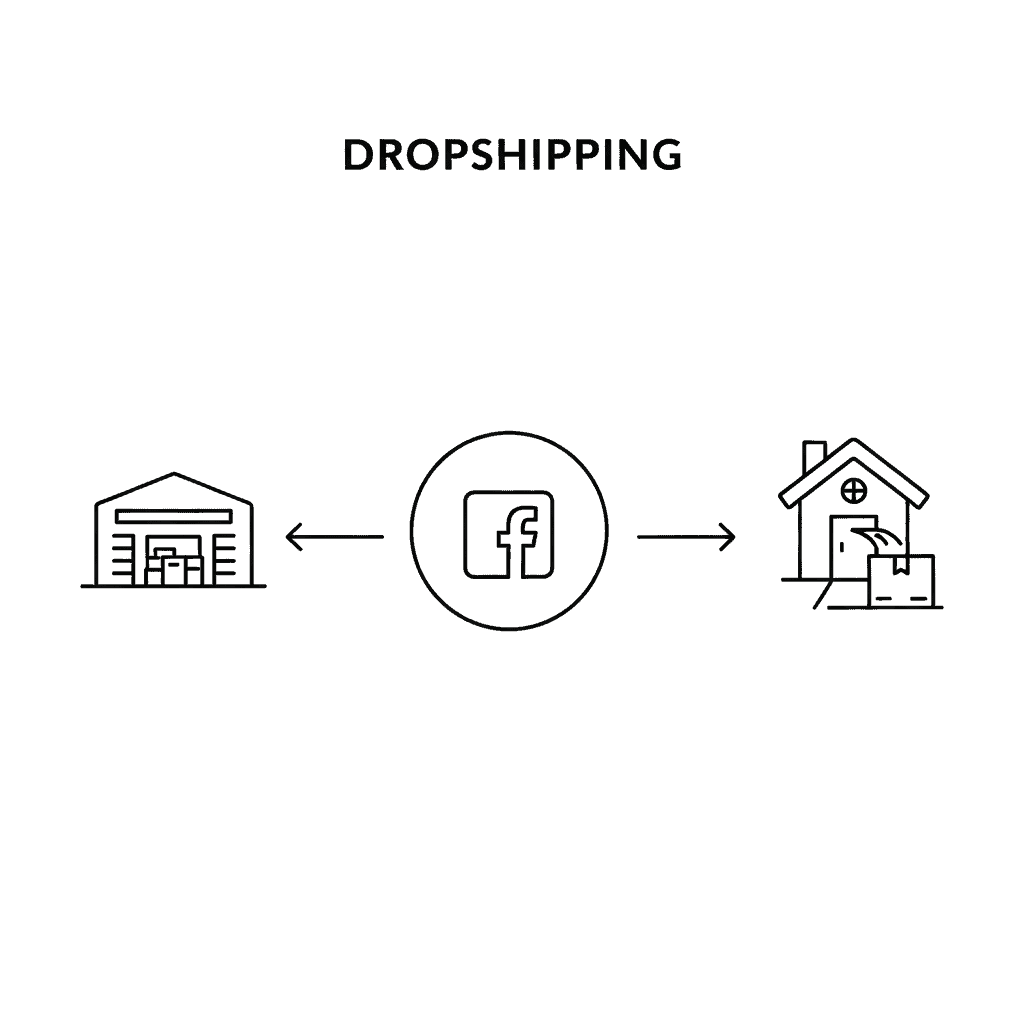
Key differences from standard e-commerce dropshipping: – No integrated checkout—buyers message you to arrange payment – Listings compete with local sellers offering immediate pickup – Facebook's algorithm favors proximity, showing your listings to nearby users first – No storefront or brand presence—each listing stands alone
According to Printify's 2026 analysis, Facebook currently doesn't process payments for Marketplace transactions, meaning you'll handle payments through external methods like PayPal, Venmo, or cash apps.
How to Start Dropshipping on Facebook Marketplace
Step 1: Verify Your Account Eligibility
Before listing anything, confirm you can legally operate on Marketplace. Facebook's Commerce Policy explicitly states that users in the European Economic Area, Philippines, and India may face account suspension for commercial selling activity.
If you're in an unrestricted region, ensure your account has: – A profile older than 30 days – Verified identity – No recent policy violations – Active engagement (not a dormant account)

Step 2: Select Your Product Niche
Product selection makes or breaks Marketplace dropshipping. The platform's local-first algorithm means certain categories perform dramatically better:
High-performing Marketplace categories: – Home décor and furniture – Electronics and accessories – Fitness equipment – Pet supplies – Seasonal items (holiday decorations, outdoor gear)
Categories to avoid: – Items requiring try-on (clothing has high return rates) – Fragile items with complex shipping requirements – Anything violating Facebook's prohibited items list
Step 3: Find Reliable Suppliers
Your supplier relationship determines your customer experience. Marketplace buyers expect faster delivery than typical e-commerce customers because they're accustomed to local pickup options.
Supplier criteria for Marketplace success: 1. US-based warehouses (for US sellers) with 3-5 day shipping 2. Blind shipping capability (no supplier branding on packages) 3. Real-time inventory updates to prevent overselling 4. Competitive wholesale pricing with healthy margins

Step 4: Create Optimized Listings
Since Marketplace lacks SEO in the traditional sense, your listing optimization focuses on:
Title optimization: – Front-load the product name and key features – Include size, color, or variant in the title – Keep titles under 100 characters for mobile display
Description best practices: – Lead with benefits, not features – Include shipping timeframe upfront (manages expectations) – Add a clear call-to-action (“Message me to order!”) – Specify payment methods accepted
Photography requirements: – Use supplier images initially, but test with lifestyle photos – First image should show the complete product on white background – Include scale reference images
The Real Advantages of Facebook Marketplace Dropshipping
AutoDS reports that Marketplace has become “one of the most accessible ways to start an online business”—and the data supports this claim.
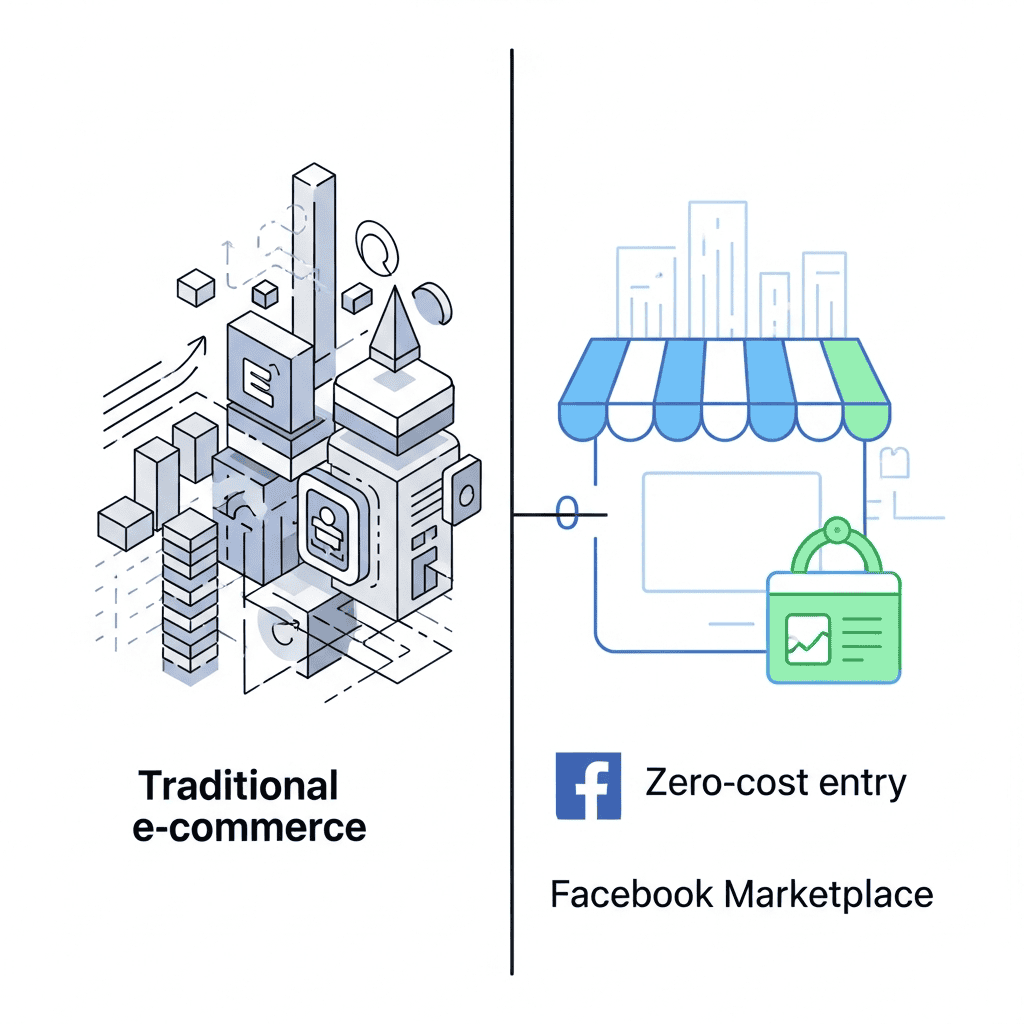
Why sellers choose Marketplace over standalone stores:
| Advantage | Impact |
|---|---|
| Zero listing fees | 100% margin protection |
| Built-in audience | No paid advertising required to start |
| Peer-to-peer messaging | Direct customer relationships |
| Trust signals | Facebook profile adds legitimacy |
| Mobile-first design | Buyers browse during downtime |
The platform's structure allows for quick listing creation and immediate visibility—something that takes months to achieve with a new Shopify store relying on SEO or paid ads.
Challenges You'll Face (And How to Solve Them)
Challenge 1: No Payment Processing
The problem: Facebook doesn't handle transactions, leaving payment collection to you.
The solution: Establish clear payment protocols in every listing. Most successful Marketplace dropshippers use: – PayPal Goods & Services (offers buyer protection) – Facebook Pay (when available) – Stripe payment links
Include your preferred payment method in every listing description and confirm payment before forwarding orders to suppliers.
Challenge 2: Shipping Time Expectations
The problem: Marketplace buyers expect local-speed delivery. A 14-day shipping window kills conversions.
The solution: Source exclusively from domestic suppliers. Dropified's supplier filtering lets you identify vendors with US warehouse inventory, ensuring 3-7 day delivery that meets Marketplace buyer expectations.
Challenge 3: Manual Listing Management
The problem: Unlike integrated platforms, Marketplace requires individual listing creation—time-consuming at scale.
The solution: Batch your workflow. Create listing templates, schedule specific “listing sessions,” and use automation tools where permitted. SaleHoo notes that providers like AutoDS offer Facebook Marketplace automation, though options remain limited compared to traditional e-commerce platforms.
Scaling Your Facebook Marketplace Dropshipping Business
Once you've validated product-market fit with manual listings, scaling requires systematization.
The Dropified approach to scaling: 1. Centralized order management — Track Marketplace orders alongside other channels in one dashboard 2. Automated supplier communication — Forward orders instantly without manual data entry 3. Inventory synchronization — Prevent overselling with real-time stock updates 4. Profit tracking — Monitor margins per product to double down on winners
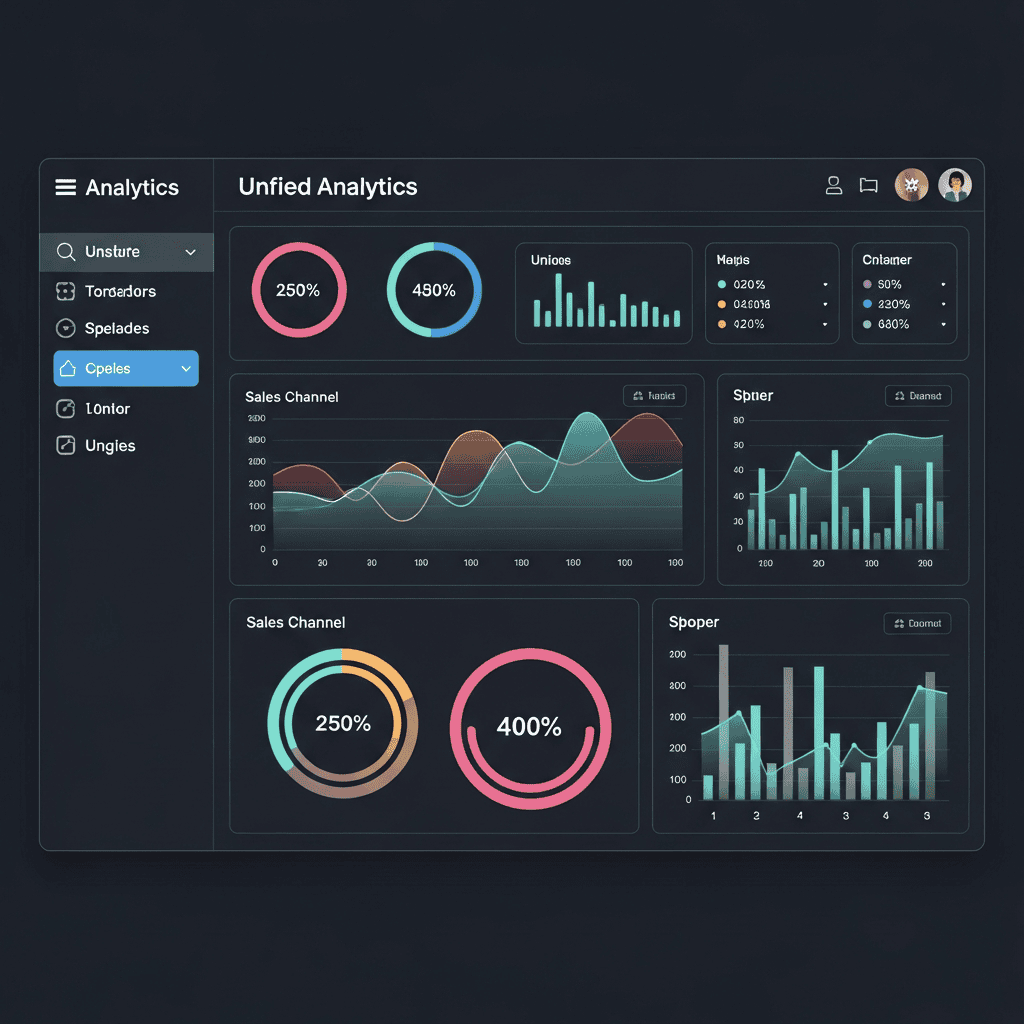
Scaling milestones to target: – Month 1: 10-20 listings, testing product categories – Month 2: 50+ listings, identifying top performers – Month 3: 100+ listings, automating fulfillment workflows – Month 6: Multi-channel expansion (adding Shopify or eBay integration)
Compliance: Staying on the Right Side of Facebook Policy
Facebook actively monitors for commercial activity that violates Marketplace's consumer-to-consumer intent. Protect your account by:
- Never using business branding in listings (appear as individual seller)
- Responding promptly to all buyer messages (algorithm favors engagement)
- Avoiding prohibited categories (weapons, adult content, counterfeit goods)
- Maintaining realistic shipping promises (under-promise, over-deliver)
- Handling disputes professionally (negative reviews impact visibility)
If you're scaling seriously, consider Marketplace as a customer acquisition channel that feeds into your owned e-commerce property—not your sole business infrastructure.
Your Next Steps for Facebook Marketplace Success
Dropshipping on Facebook Marketplace offers a genuine low-risk entry into e-commerce, but success requires treating it as a real business channel—not a casual side hustle.

Your action plan: 1. Verify your account meets Marketplace eligibility requirements 2. Research 3-5 product niches using Dropified's product research tools 3. Identify domestic suppliers with 5-day-or-less shipping 4. Create your first 10 listings using the optimization framework above 5. Establish payment collection and customer communication workflows
The sellers winning on Facebook Marketplace in 2026 combine the platform's massive organic reach with professional fulfillment infrastructure. Start your free Dropified trial to access supplier networks, order automation, and inventory management that transforms Marketplace from a manual grind into a scalable revenue channel.
✨ Want an AI Summary of this article?