- Google Trends for dropshipping product validation involves analyzing search interest data over time to confirm whether a product idea has real, sustained consumer demand before you invest money in it.
- Use the “Interest over time” graph to distinguish between products with stable demand, seasonal spikes, and dying fads — aiming for items that show consistent or rising search volume over 12–24 months.
- Compare multiple product ideas side-by-side using Google Trends' comparison feature to objectively determine which has stronger market potential in your target region.
- Cross-reference Google Trends data with related queries and breakout topics to discover untapped sub-niches and emerging product variations competitors haven't found yet.
- Validate geographic demand by filtering results by country, state, or metro area to align your product selection with regions where you can actually fulfill orders profitably.
Why Google Trends Is the First Tool Smart Dropshippers Use
Most failed dropshipping stores share a common origin: the owner picked products based on gut instinct instead of data. Google Trends for dropshipping product validation eliminates that guesswork by showing you exactly how consumer interest behaves over weeks, months, and years.
Unlike paid keyword tools that show static monthly averages, Google Trends reveals the direction of demand. A product averaging 10,000 monthly searches sounds promising — until you realize those searches dropped 60% in the last six months. Google Trends catches what other tools miss.
The platform is completely free, updated in near-real-time, and requires zero technical expertise. Yet fewer than 20% of new dropshippers use it systematically before choosing products. That gap represents your competitive advantage.
💡 Dropified Insight: After validating product demand with Google Trends, Dropified's one-click product import lets you instantly add winning items from AliExpress and other suppliers to your store — so you can move from research to live listing in minutes, not hours. Dropified's built-in product research tools also help you cross-verify supplier availability for the trending products you discover.
Step 1: Access Google Trends and Set Your Baseline
Navigate to Google Trends and enter your product idea as a search term. Before analyzing anything, configure these critical settings:
- Time range: Set to “Past 12 months” for trending products or “Past 5 years” for evergreen validation
- Geography: Select your target market country (usually United States, UK, or Australia)
- Category: Choose the most relevant category to filter out unrelated search noise
- Search type: Keep on “Web Search” for general validation or switch to “Google Shopping” for purchase-intent signals
Pro tip: Always search for what a buyer would actually type. “Posture corrector” outperforms “back support device” because that's how real consumers search. Test 2–3 phrasing variations to find the highest-volume term before proceeding.
Step 2: Read the Interest-Over-Time Graph Like a Pro
The main graph shows relative search interest on a scale of 0–100. Here's how to interpret what you see:
Patterns That Signal a Winner
- Steady horizontal line (60–100 range): Evergreen demand. Products like phone cases and resistance bands follow this pattern. These are safe, long-term plays.
- Consistent upward slope: Growing market. This is the holy grail — rising demand means less competition and higher margins right now.
- Predictable annual spikes: Seasonal products. Profitable if you time your inventory and ads correctly.
Patterns That Signal Danger
- Sharp spike followed by decline: Fad product. Fidget spinners, for example, peaked and crashed within months. Avoid unless you can enter and exit fast.
- Flat line below 25: Insufficient demand. Not enough people are searching to sustain a profitable store.
- Downward slope over 2+ years: Dying market. Even strong marketing won't reverse a structural demand decline.
The key insight most guides miss: a product doesn't need to be “trending up” to be profitable. Stable, consistent demand at moderate levels often outperforms viral spikes because competition stays lower and you can build a sustainable business around it. This is especially relevant when exploring the most profitable dropshipping niches in 2026.
Step 3: Use the Comparison Feature to Pick Winners
Google Trends lets you compare up to five search terms simultaneously. This feature transforms subjective product debates into objective, data-driven decisions.
Here's the framework:
- Enter your top 3–5 product ideas as separate comparison terms
- Set identical time ranges and geographies for all
- Identify which product maintains the highest floor (not just the highest peak)
- Check whether any product is consistently gaining ground on the leader
For example, comparing “portable blender” versus “ice maker” versus “air fryer accessories” over the past two years reveals dramatically different demand profiles. One may dominate in summer, another in winter, and the third year-round. This data directly informs whether you build a seasonal store or an evergreen catalog — a decision framework covered in depth in our guide on how to use Google Trends to find winning dropshipping niches before they peak.
Step 4: Mine Related Queries for Hidden Product Opportunities
Scroll below the main graph to find the “Related queries” section. This is where Google Trends becomes genuinely powerful for product discovery — and where most dropshippers stop too early.
Switch between “Top” and “Rising” tabs:
- Top queries show established, high-volume related searches
- Rising queries (especially those marked “Breakout”) reveal emerging demand surges
A “Breakout” label means that query's search volume increased by over 5,000%. These are early signals of products about to explode.

Real-world application: Searching “dog accessories” might reveal a breakout query for “dog cooling vest.” That specific sub-niche is far more actionable than the broad category — lower competition, clearer audience targeting, and easier ad messaging. You'll find more niche-specific strategies in our breakdown of pet products dropshipping in 2026.
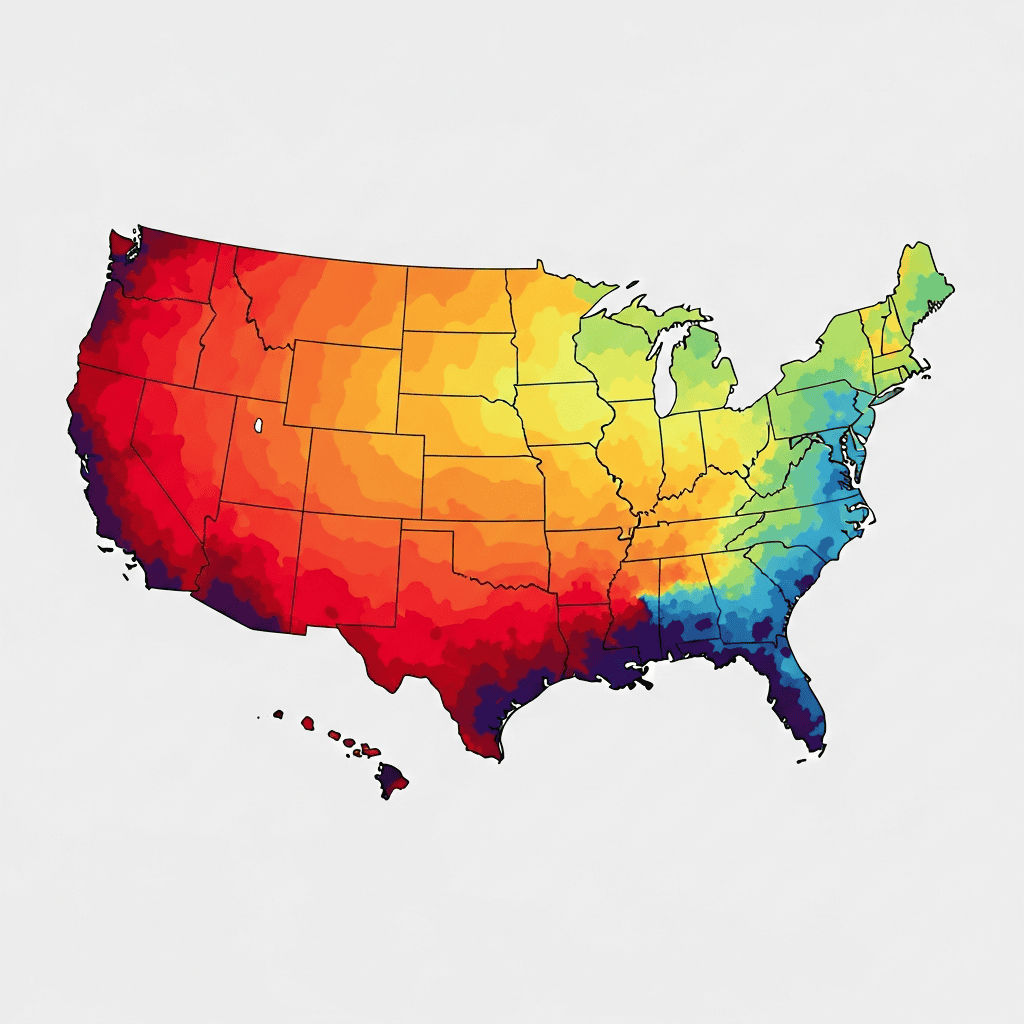
Step 5: Validate Geographic Demand Before Committing
Click on the geographic breakdown to see where people are searching for your product. This step prevents a costly mistake: marketing a product nationally when demand is concentrated in regions you can't serve efficiently.
What to look for:
- Broad geographic spread: Demand across 15+ states or regions signals a viable national product
- Concentrated clusters: Demand in only 2–3 areas may work for targeted campaigns but limits scaling potential
- International patterns: Compare your home country against 2–3 other markets for expansion planning
This geographic data also informs your ad targeting. If “standing desk converter” trends highest in California, New York, and Texas, those states get your initial ad budget. You optimize spend from day one instead of wasting money on low-intent regions.
Step 6: Cross-Reference With External Data Sources
Google Trends alone isn't enough. According to CJ Dropshipping's product research guide, you should validate findings with competitor analysis, keyword research tools, and supplier stock checks before committing to any product.
Build a validation stack by combining Google Trends with:
- Amazon Best Sellers: Confirms people are actually buying, not just searching
- Google Keyword Planner: Provides absolute search volume numbers (Google Trends only shows relative data)
- Social media hashtag volume: Validates cultural relevance and marketing potential
- Supplier availability checks: Ensures you can actually source the product at viable margins
As Shoplazza's research emphasizes, creating a product lineup informed by multi-source analysis keeps you ahead of market trends rather than chasing them.
This multi-channel validation approach is the exact methodology used by sellers who successfully operate across platforms, whether they're running stores on Shopify or Amazon or even mastering eBay dropshipping.

The Validation Scorecard: A Framework You Won't Find Elsewhere
Here's a proprietary scoring system to turn your Google Trends research into a clear go/no-go decision:
| Criteria | Score Range | What to Measure |
|---|---|---|
| Trend Direction | 0–25 | Rising = 25, Stable = 15, Declining = 5 |
| Demand Consistency | 0–25 | Few dips = 25, Seasonal = 15, Erratic = 5 |
| Geographic Spread | 0–15 | 15+ regions = 15, 5–14 = 10, Under 5 = 5 |
| Breakout Queries | 0–15 | 3+ breakouts = 15, 1–2 = 10, None = 5 |
| Competition Gap | 0–20 | Low competition = 20, Medium = 12, High = 5 |
Products scoring 70+ are strong candidates. Products scoring 40–69 need additional validation. Below 40 — move on to the next idea.
This scorecard eliminates emotional attachment to product ideas and forces data-driven decisions. Apply it to every product before importing it into your store.
Turn Validated Products Into a Live Store — Fast
Validating a product idea is only valuable if you act on it quickly. Trends move fast, and the window between “rising demand” and “saturated market” shrinks every year.
Once your product scores 70+ on the validation scorecard, your next steps are clear:
- Source the product from a reliable supplier with proven shipping times
- Import it to your store with optimized titles, descriptions, and images
- Launch targeted ads to the geographic regions Google Trends identified as hotspots
- Monitor search trends weekly and adjust inventory before demand shifts
Understanding how to handle returns is also essential before scaling any validated product — it protects your margins and reputation as order volume grows.

Key Takeaways
Google Trends for dropshipping product validation isn't just a “nice to have” — it's the difference between launching products that sell and products that sit. The six-step process above transforms free, publicly available data into a systematic product selection advantage.
The dropshippers who win in 2026 aren't guessing. They're validating every product idea with data, moving fast on confirmed opportunities, and cutting losers before they drain ad budgets.
Ready to turn validated product ideas into a profitable store? Start your free Dropified trial and import winning products in one click — directly from your research to a live, optimized listing. Visit the Dropified blog for more data-driven dropshipping strategies.
✨ Want an AI Summary of this article?