
- A customer support AI agent for ecommerce automates ticket resolution end-to-end — handling refunds, order tracking, returns, and FAQs without human intervention.
- The best AI agents integrate directly with your commerce stack (Shopify, WooCommerce) and helpdesks (Gorgias, Zendesk) to pull real customer context before responding.
- In 2026, leading platforms like Fin by Intercom, Yuma AI, and Zowie resolve 60–80% of routine tickets autonomously, freeing human agents for complex escalations.
- Effective AI support requires guardrails, brand-voice calibration, and a clear escalation path — not just a chatbot with canned responses.
- Dropshipping sellers benefit most by pairing AI support agents with automated fulfillment workflows, eliminating the two biggest time drains in ecommerce operations.
Why Most Ecommerce Customer Support Bots Fail
The average ecommerce store receives between 50 and 200 support tickets per week. Most involve the same five questions: where's my order, how do I return this, can I get a refund, do you ship to my country, and why was I charged twice.
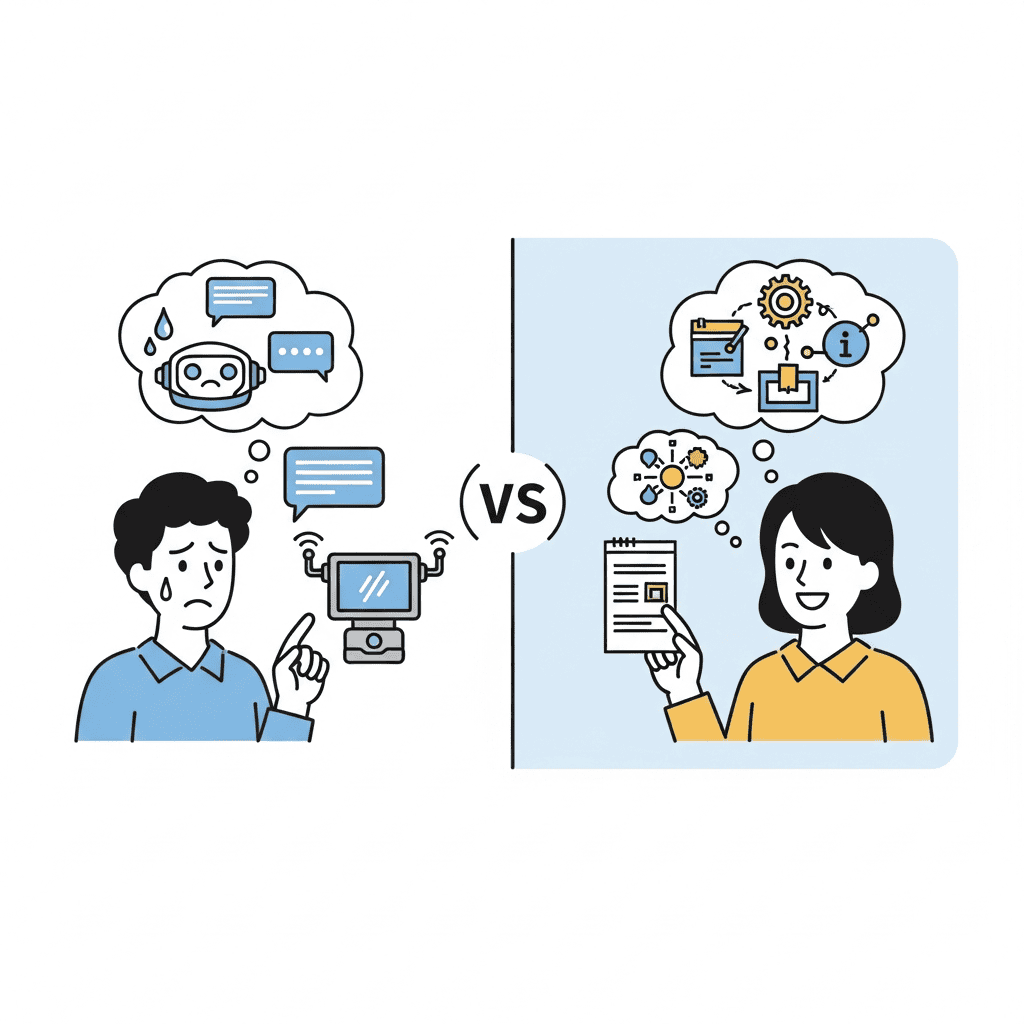
Traditional chatbots answer these with scripted decision trees. The moment a customer's question deviates even slightly from the script, the bot loops, frustrates the buyer, and escalates to a human anyway. That's not AI support — it's a flowchart with a chat window.
A true customer support AI agent for ecommerce operates differently. It connects to your order management system, reads the customer's purchase history, determines intent, and takes real action — issuing a refund, generating a return label, or updating a shipping address — without a human touching the ticket.
The distinction matters because customer service directly impacts repeat purchase rates. Getting this right is no longer optional for stores scaling past $10K/month in revenue.
What a Customer Support AI Agent Actually Does in 2026
The AI support landscape has matured dramatically. According to Fin.ai's 2026 roundup, the leading ecommerce AI agents now handle order updates, refunds, returns, subscription changes, and basic troubleshooting across chat, email, social, and voice channels simultaneously.
Here's what separates a real AI agent from a glorified FAQ bot:
Contextual Awareness Before the First Reply
Before your AI agent sends a single word, it pulls the customer's full profile: order history, shipping status, past tickets, lifetime value, and product preferences. Kustomer's 2026 best practices report highlights this as the single biggest differentiator — AI that understands who it's talking to resolves tickets 3x faster than generic responders.
End-to-End Action Execution
Modern AI agents don't just suggest solutions. They execute them. Platforms like Yuma AI connect directly to Shopify, BigCommerce, WooCommerce, Gorgias, and Zendesk to:
- Process refunds within policy parameters
- Generate and send return shipping labels
- Update order addresses pre-shipment
- Cancel or modify subscriptions
- Apply discount codes for retention
Guardrails That Prevent Costly Mistakes
The fear with autonomous AI is that it will refund a $500 order without authorization. The best platforms solve this with configurable guardrails — dollar thresholds, policy rules, and mandatory escalation triggers for edge cases.
💡 Dropified Insight: Dropified's automated order fulfillment and one-click product import features pair directly with AI support agents. When a customer asks “where's my order?”, the AI agent can pull real-time tracking data from Dropified's fulfillment pipeline — no manual lookup required. This integration eliminates the most common support ticket category for dropshipping stores entirely, letting you scale without hiring a support team.
How to Build Your AI Support Stack (Step-by-Step)
Setting up a customer support AI agent isn't plug-and-play. Here's the framework that actually works for ecommerce sellers in 2026.
Step 1: Audit Your Top 10 Ticket Categories
Export your last 90 days of support tickets. Categorize them. For most dropshipping stores, the breakdown looks like this:
- Order tracking (30–40%)
- Refund/return requests (15–25%)
- Product questions (10–15%)
- Shipping time concerns (10–15%)
- Payment issues (5–10%)
The categories that make up 80% of your volume are where AI delivers immediate ROI.
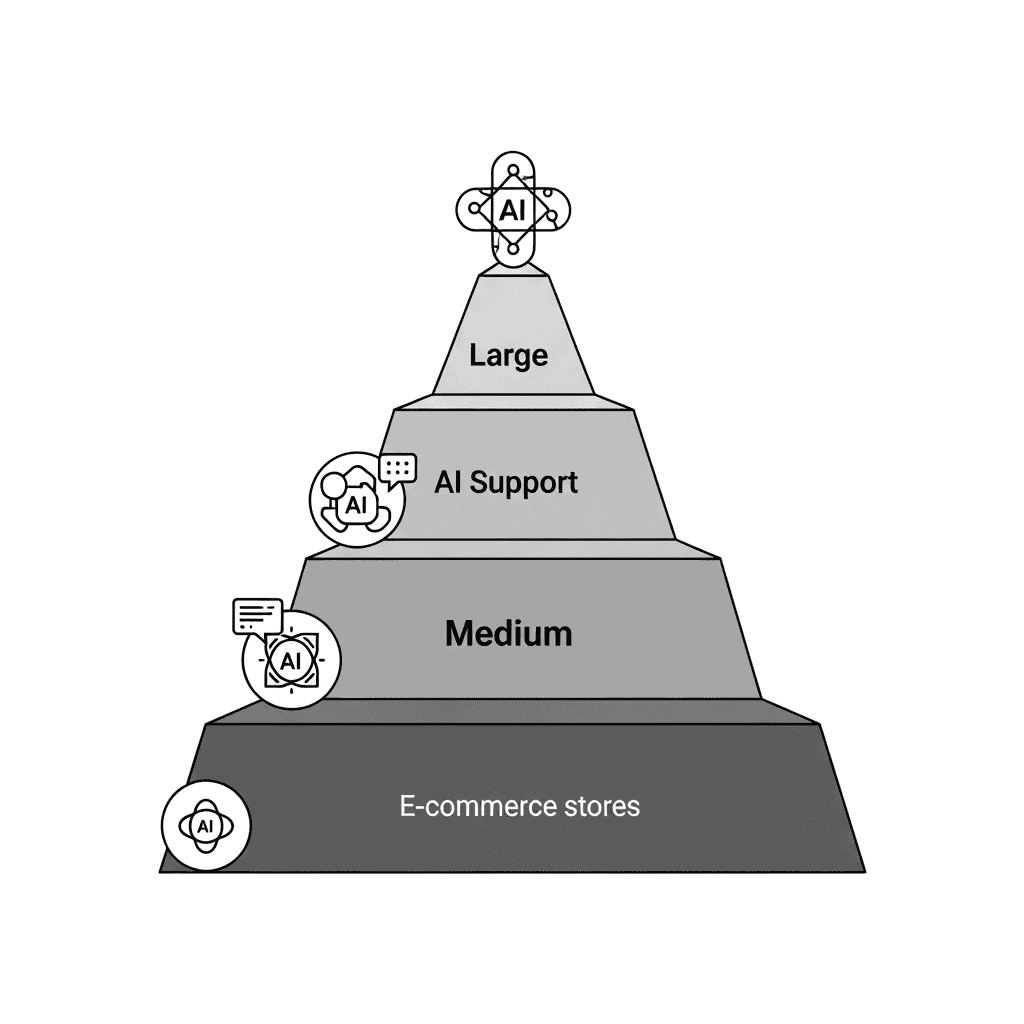
Step 2: Choose the Right Platform for Your Scale
| Monthly Tickets | Best Fit | Price Range |
|---|---|---|
| Under 500 | Gorgias AI + Shopify native | $50–150/mo |
| 500–2,000 | Yuma AI or Fin by Intercom | $200–500/mo |
| 2,000+ | Zowie or Kustomer AI | $500+/mo |
For dropshipping sellers using Dropified, Gorgias integrates cleanly with Shopify stores and provides a natural starting point. As your store scales, layering in a dedicated AI agent like Yuma adds end-to-end resolution capability.
Step 3: Train the Agent on Your Brand Voice and Policies
This is where most sellers skip and pay for it later. Your AI agent needs:
- A complete return/refund policy in structured format
- Brand voice guidelines (formal vs. casual, emoji usage, sign-off style)
- Escalation rules (when to hand off to a human)
- Product knowledge base covering your top 20 SKUs
Without this training data, the AI defaults to generic corporate-speak that erodes trust with your customers.
Step 4: Implement a Human-in-the-Loop Escalation Path
No AI agent should operate without a safety net. Configure automatic escalation for:
- Tickets involving orders above a set dollar value
- Customers flagged as VIP or high-LTV
- Any interaction where the AI's confidence score drops below 80%
- Legal or compliance-related inquiries
This is the same principle behind effective live chat support — technology handles the routine, humans handle the nuance.
The Information Gain: The 72-Hour Brand Voice Calibration Method
Here's something the top 10 search results don't cover: the most effective way to train your AI agent isn't uploading a policy document. It's the 72-Hour Calibration Loop.
How it works:
- Hours 0–24: Launch the AI agent in “shadow mode” — it drafts responses but a human reviews and sends every one.
- Hours 24–48: Switch to “suggestion mode” — the AI sends responses automatically, but flags every ticket for human review within 2 hours.
- Hours 48–72: Move to “autonomous mode” for your top 3 ticket categories only. Keep human review on everything else.
After 72 hours, you'll have a calibrated agent that matches your brand voice with 90%+ accuracy on routine tickets. This method reduces the typical 2-week calibration period that most AI support platforms recommend down to three days.
Scale the autonomous categories gradually. Within 30 days, most stores reach 70–80% full automation.
Connecting AI Support to Your Broader Ecommerce Strategy
A customer support AI agent doesn't exist in isolation. It's one piece of your operational stack. The stores seeing the biggest returns in 2026 connect AI support to:
- Marketing tactics that drive traffic — because more traffic means more support volume, and AI scales where humans don't
- Content marketing and customer service tools — pre-emptive content reduces ticket volume before it starts
- AI video agents for live selling — pairing sales automation with support automation creates a fully autonomous front-end
- Analytics dashboards — tracking support resolution metrics alongside sales data reveals hidden revenue leaks
Key Metrics to Track After Launching Your AI Agent
Don't just deploy and forget. Monitor these weekly:
- Automated Resolution Rate — target 60%+ within 30 days
- Average First Response Time — AI should respond in under 30 seconds
- Customer Satisfaction (CSAT) — benchmark against your pre-AI score
- Escalation Rate — should decrease month over month
- Cost Per Ticket — expect a 40–60% reduction within 90 days
If your escalation rate is climbing, revisit your training data and guardrails. If CSAT drops, your brand voice calibration needs work.
Take Action: Your Next Steps
A customer support AI agent for ecommerce is no longer a competitive advantage — it's table stakes. Stores that automate routine support free up time and capital to focus on product sourcing, marketing, and growth.
Here's your action plan:
- Export and categorize your last 90 days of support tickets
- Select a platform that matches your ticket volume and commerce stack
- Run the 72-Hour Calibration Loop before going fully autonomous
- Connect your AI agent to Dropified's fulfillment pipeline for real-time order data
- Track resolution rate, CSAT, and cost-per-ticket weekly
Start your free Dropified trial to automate your fulfillment operations — then layer AI support on top for a store that runs itself.
✨ Want an AI Summary of this article?