
- An auto-pricing AI agent continuously monitors competitor prices, demand signals, and supplier costs to adjust your store's pricing in real time—protecting and expanding profit margins without manual intervention.
- Deploying one typically involves connecting your product catalog to an AI pricing tool, setting margin floors and ceiling rules, and letting the agent optimize prices 24/7 based on live market data.
- Businesses using AI-driven dynamic pricing report 5–15% revenue increases and significantly reduced instances of underpricing or overpricing.
- For dropshippers, auto-pricing agents solve the critical problem of fluctuating supplier costs eating into margins between the time you list a product and when a customer actually buys it.
- The most effective setups combine rule-based guardrails (minimum margin thresholds) with machine-learning predictions for demand forecasting and competitive positioning.
What Is an Auto-Pricing AI Agent and Why Does It Matter?
An auto-pricing AI agent is autonomous software that continuously adjusts your product prices based on real-time inputs—competitor pricing, demand trends, supplier cost changes, and inventory levels. Unlike static pricing rules or manual spreadsheet updates, these agents predict and react simultaneously.
McKinsey estimates that AI-based pricing and promotion optimization can increase revenues by 2–5% and margins by even more. For dropshippers operating on already thin margins, that difference is the gap between a profitable store and one bleeding money on every order.
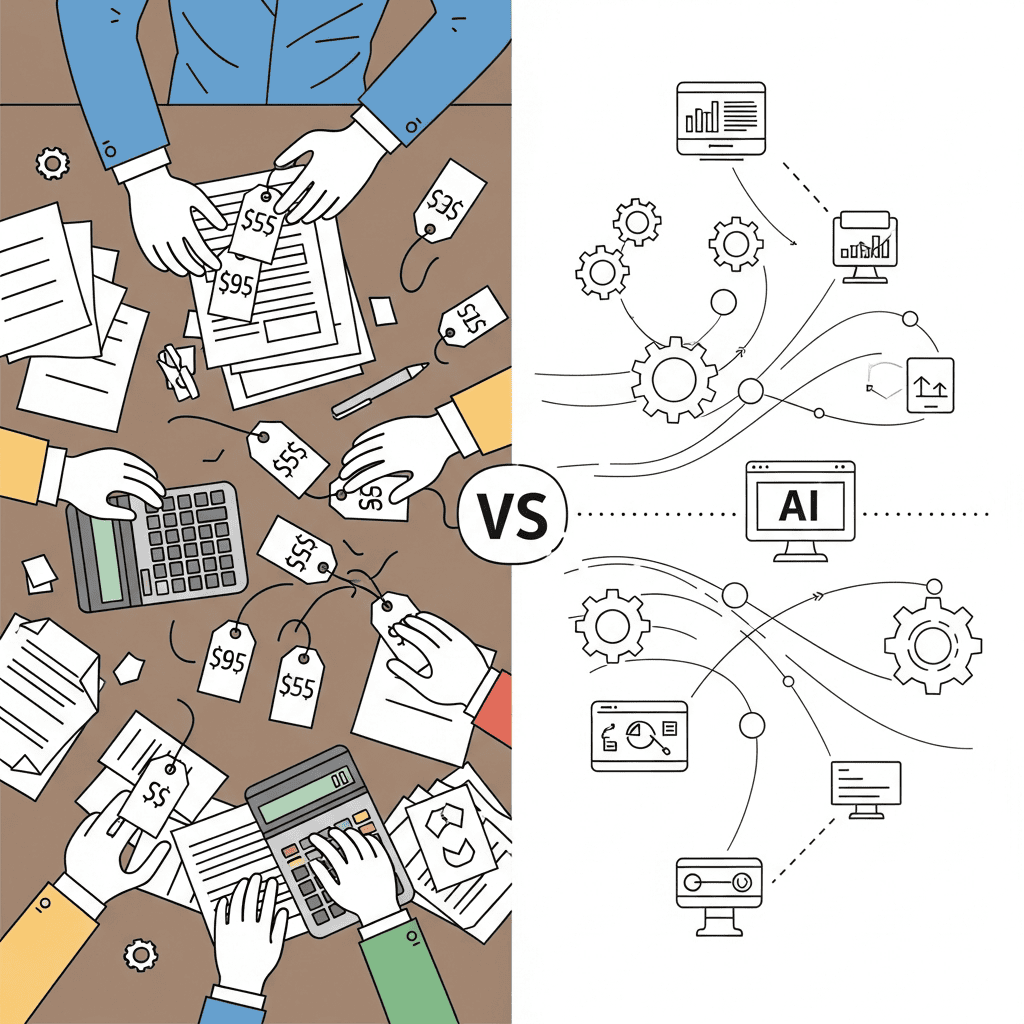
The core problem is simple: supplier costs shift, competitors undercut you, and demand fluctuates hourly. A human cannot monitor and respond to all of these variables across hundreds or thousands of SKUs. An AI agent can—around the clock.
💡 Dropified Insight: Dropified's Automatic Margin Assistant already lets you set markup rules that apply automatically when you import products. Pairing this built-in feature with an external auto-pricing agent creates a two-layer margin protection system—Dropified handles your baseline markup on import, while the AI agent fine-tunes live store prices based on market conditions.

How Auto-Pricing AI Agents Actually Work
Understanding the mechanics helps you deploy one effectively. Here is the four-stage loop every pricing agent runs:
Stage 1: Data Ingestion
The agent pulls data from multiple sources:
- Competitor prices via scraping or API feeds
- Your supplier costs from platforms like AliExpress, CJ Dropshipping, or integrated Dropified suppliers
- Demand signals such as traffic volume, conversion rate, cart abandonment, and seasonal trends
- External factors like shipping cost changes and currency fluctuations
Stage 2: Analysis and Prediction
Machine learning models process that data to forecast:
- Likely demand at various price points
- Competitor response patterns
- Price elasticity per product category
- Optimal price-to-margin ratio for each SKU
According to Relevance AI's research on pricing optimization agents, the AI doesn't just react—it predicts demand spikes and adjusts pricing strategies before they happen, keeping you one step ahead.
Stage 3: Rule-Filtered Decision
The agent proposes a price change, but your guardrails filter it first:
- Minimum margin floor (e.g., never go below 25% markup)
- Maximum price ceiling (e.g., never exceed 2x competitor average)
- Rate-of-change limits (e.g., no more than 10% price swing per day)
Stage 4: Execution and Learning
The new price goes live. The agent then tracks what happens—did conversions go up, down, or stay flat?—and feeds that outcome back into its models for continuous improvement.
Step-by-Step Deployment Guide
Here is exactly how to deploy an auto-pricing AI agent for your dropshipping store.
Step 1: Audit Your Current Margins
Before automating anything, know your baseline. Pull your product catalog and calculate actual margins after all costs—product cost, shipping, transaction fees, ad spend per unit, and returns.
If you are running a Dropified store, export your product list and cross-reference with your high-profit-margin product data to identify which SKUs need pricing optimization most urgently.
Step 2: Define Your Pricing Rules and Guardrails
Set these non-negotiable parameters:
| Parameter | Recommended Setting |
|---|---|
| Minimum margin | 20–30% after all costs |
| Maximum daily price change | 8–12% |
| Competitor tracking frequency | Every 2–4 hours |
| Price rounding | Charm pricing (.99 or .97) |
| Loss-leader allowance | Max 5% of catalog |
These guardrails prevent the AI from making destructive decisions while still giving it room to optimize.

Step 3: Choose Your Pricing Agent Tool
The market has several options in 2026:
- Prisync and Competera for mid-market stores needing competitor-based repricing
- Intelligence Node for enterprise-grade AI pricing
- Custom GPT-based agents built on platforms like Relevance AI for flexible, task-specific pricing automation
- Shopify-native apps like Prismatic and RepricerExpress for direct integration
For Dropified users, the key is choosing a tool that integrates with your Shopify or WooCommerce storefront, since Dropified syncs your product data to those platforms. The pricing agent reads from and writes to your storefront—Dropified handles the supply side.
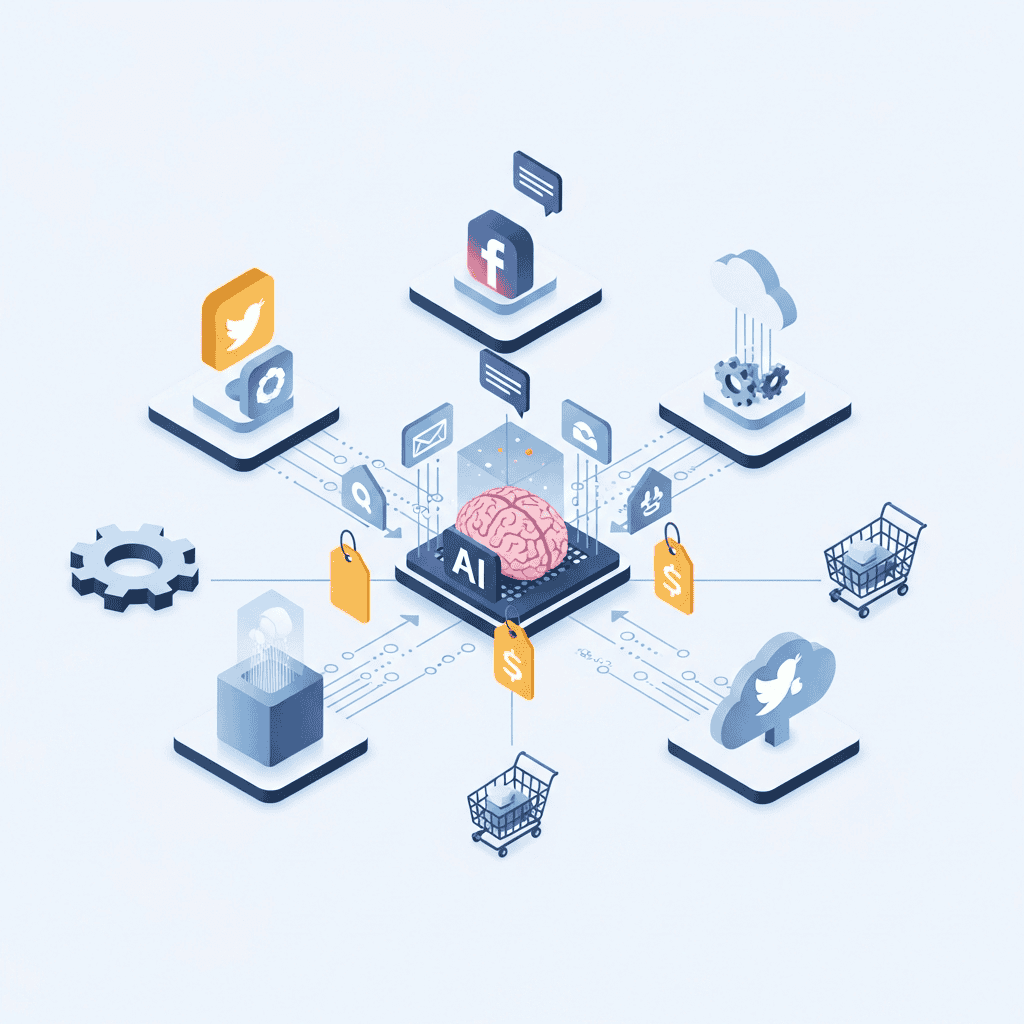
Step 4: Connect Data Sources
Wire up these integrations:
- Storefront API (Shopify/WooCommerce) for live product and sales data
- Dropified product feed for current supplier costs and variants
- Google Analytics or your ad platform for traffic and conversion data
- Competitor monitoring feed from your chosen tool
Smart dropshippers also connect shipping cost variance alerts to their pricing agent so that unexpected shipping cost increases automatically trigger a price adjustment.
Step 5: Run a Controlled Test
Never deploy to your full catalog at once.
- Start with 20–30 SKUs across different categories
- Run for 14–21 days minimum
- Compare against a control group with static pricing
- Track: revenue per SKU, margin per SKU, conversion rate, and return rate
Research from Akira AI confirms that AI pricing agents operating 24/7 consistently outperform manual pricing—but only after the learning period where the models calibrate to your specific market.
The Information Gap: What Competitors Are Not Telling You
Most guides on auto-pricing agents focus on enterprise retailers. Here is what matters specifically for dropshippers that you will not find elsewhere:
Supplier cost volatility is your biggest pricing risk. Unlike traditional retailers with fixed wholesale contracts, your product costs can change daily. Your pricing agent must ingest supplier cost data at least daily—or you risk selling at a loss when a supplier raises prices by 15% overnight.
Currency arbitrage matters. If you sell in USD but source in CNY, your pricing agent should factor in forex rates. A 3% currency swing can erase your entire margin on low-markup items.
Bundle pricing amplifies AI effectiveness. When your agent can adjust not just individual SKU prices but also bundle discounts and quantity breaks, margin optimization potential jumps significantly. Products in trending categories like smart home devices and pet products respond particularly well to AI-optimized bundle pricing.
Common Mistakes to Avoid
- Setting margins too tight. A 10% minimum margin leaves no buffer for returns, chargebacks, or ad cost spikes. Aim for 25%+ minimum.
- Ignoring seasonality. Your agent needs at least one full seasonal cycle of data before it can reliably predict holiday demand patterns.
- Over-automating too early. Keep human review in the loop for the first 60 days. Approve large price changes manually until you trust the model.
- Forgetting about MAP policies. Some suppliers enforce Minimum Advertised Price rules. Your agent must respect these or risk account suspension.
- Not connecting to revenue optimization strategies. Pricing is one lever—combine it with ad optimization and product selection for compound growth.
Measuring Success: KPIs That Matter
Track these metrics weekly after deployment:
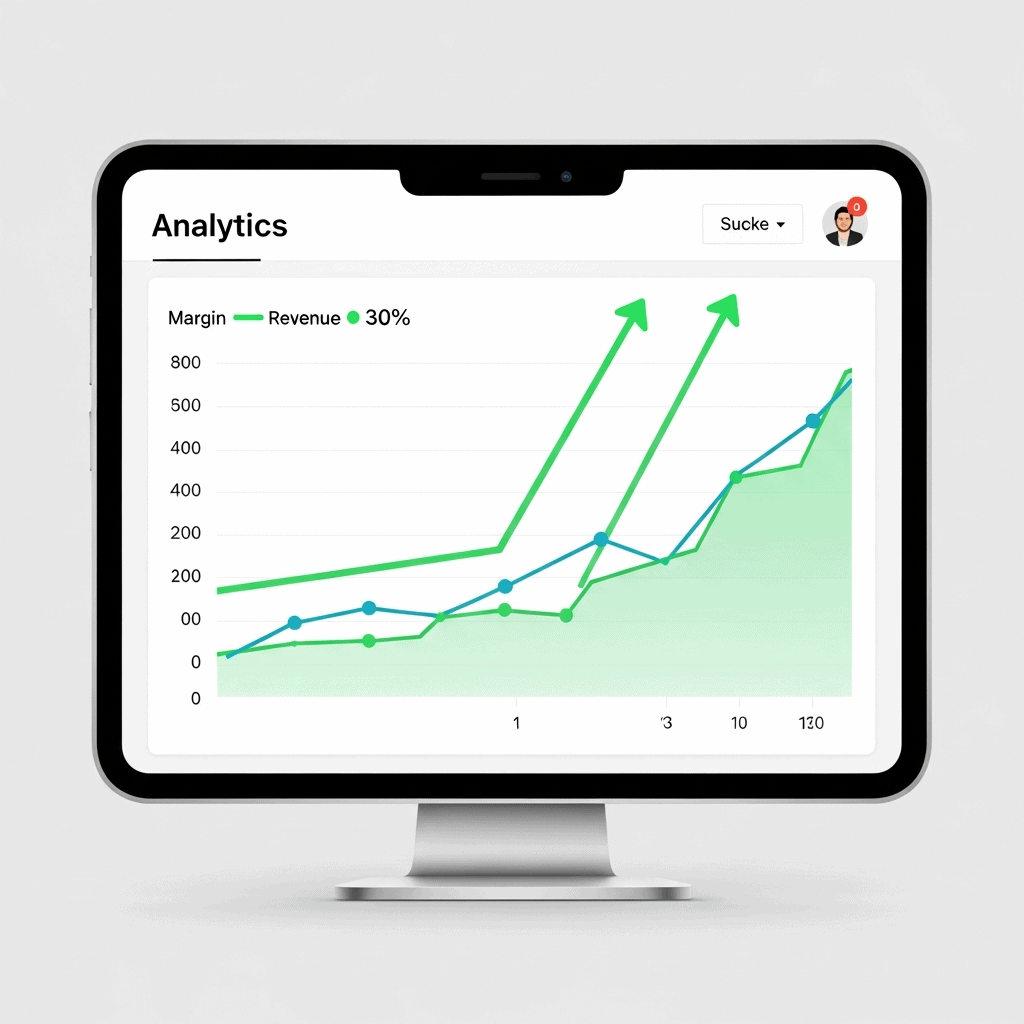
- Gross margin percentage (target: 2–5 point improvement within 90 days)
- Revenue per session (should increase as pricing better matches willingness to pay)
- Price competitiveness score (percentage of SKUs priced within 5% of market median)
- Repricing frequency (healthy range: 3–8 adjustments per SKU per week)
- Lost-sale rate (orders abandoned after price change—should stay under 2%)
Conclusion: Start Protecting Your Margins Now
Deploying an auto-pricing AI agent is no longer optional for serious dropshippers in 2026. Supplier costs shift too fast, competitors reprice too aggressively, and margins are too thin to manage manually across a growing catalog.
Start by auditing your current margins, set clear pricing guardrails, and run a controlled test on your top-performing SKUs. Pair your pricing agent with Dropified's Automatic Margin Assistant for a two-layer margin defense system that handles both import-time markup and live market optimization.
Explore trending high-margin products for 2026 to stock your catalog with SKUs that give your pricing agent the best raw material to work with—and start your free Dropified trial to put these strategies into action today.
✨ Want an AI Summary of this article?