- Dropshipping in 2026 is a low-barrier e-commerce business model where you market products online while suppliers handle inventory storage, packing, and shipping directly to customers—you profit from the margin between retail and wholesale prices.
- The model has evolved to favor niche product specialization, faster domestic fulfillment partnerships, and AI-powered product research tools that track real-time sales data and trending items across platforms like TikTok and Shopify.
- Success in 2026 requires focusing on higher-margin niche products rather than generic items, prioritizing suppliers with domestic fulfillment centers for faster delivery, and leveraging automation tools to reduce operational overhead while scaling customer acquisition.
- Profit margins remain thin on commodity products (typically 10-30%), making strategic product selection and marketing efficiency the primary differentiators between successful and struggling dropshipping businesses.
Dropshipping continues to reshape e-commerce in 2026, offering entrepreneurs a path to online retail without the traditional barriers of inventory investment or warehouse management. This dropshipping guide 2026 breaks down the complete business model, emerging trends, and profit strategies that separate successful stores from failures in an increasingly competitive marketplace.
What Is Dropshipping and How Does It Work in 2026?
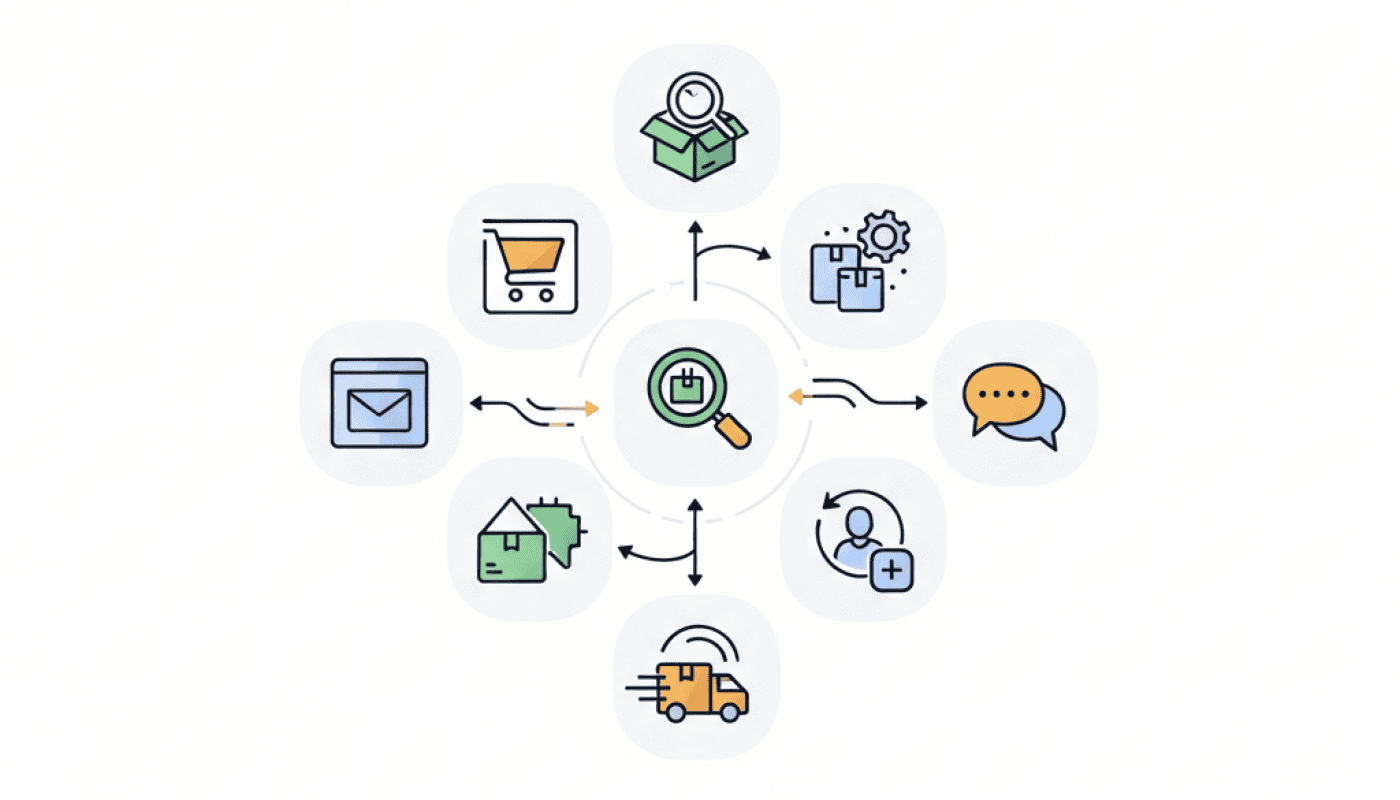
Dropshipping is a retail fulfillment method where you sell products online without holding inventory. When a customer places an order, you purchase the item from a third-party supplier who ships it directly to the customer. Your role centers on three core activities: building an online storefront, marketing products, and managing customer relationships.
The basic dropshipping workflow:
- Customer places order on your online store
- You forward order details to your supplier
- Supplier packages and ships product directly to customer
- You keep the profit margin between retail and wholesale price
According to current market analysis, this model appeals to new entrepreneurs because it eliminates upfront inventory costs and reduces operational complexity. However, 2026 data shows that success increasingly depends on strategic niche selection rather than simply listing popular products.
💡 Dropified Insight: Dropified's automated order fulfillment system eliminates the manual process of forwarding orders to suppliers, processing hundreds of orders with a single click while automatically updating tracking information for customers—turning what used to take hours into a 30-second task that scales effortlessly as your business grows.
Why Dropshipping Remains Viable in 2026
Despite increased competition, dropshipping thrives because of three fundamental advantages that haven't changed:
Low startup costs. You can launch a functional dropshipping store for under $500, including domain registration, e-commerce platform subscription, and initial marketing budget. Traditional retail would require tens of thousands for inventory alone.
Location independence. Manage your entire operation from anywhere with internet access. Suppliers handle physical logistics while you focus on digital marketing and customer service.
Product flexibility. Test new products without financial risk. If an item doesn't sell, simply remove it from your store—no deadstock, no liquidation losses.
The shift in 2026 centers on how successful dropshippers operate. Current industry research confirms that niche product dropshipping significantly outperforms general stores, with specialized categories like eco-friendly products or tech accessories commanding higher margins and more loyal customers than generic marketplaces.
2026 Dropshipping Trends You Must Know
AI-Powered Product Research
The biggest operational shift in 2026 involves automated product discovery tools. Platforms now offer spy tools that track real-time sales data across TikTok, Facebook, and Shopify stores, showing exact unit volumes, revenue estimates, and trend trajectories. This technology—previously costing $100+ monthly—has become accessible to beginners, democratizing competitive intelligence that was once reserved for established sellers.
What this means for you: Stop guessing which products might work. Use data-driven insights to identify proven winners before investing marketing budget.
Domestic Fulfillment Prioritization
Shipping speed has become a decisive competitive factor. Supplier selection criteria in 2026 now emphasize domestic fulfillment centers over international shipping. Customers expect 3-7 day delivery, not 3-4 weeks. Suppliers with US, UK, or EU warehouses command premium positioning despite slightly higher wholesale costs.
Platform Diversification
Successful dropshippers no longer rely exclusively on a single sales channel. The 2026 strategy involves simultaneous presence on Shopify stores, Amazon, eBay, and emerging platforms like TikTok Shop—each serving different customer segments with varying purchase behaviors.
How to Choose Profitable Dropshipping Products
Product selection determines 80% of your success. Follow this framework:
1. Identify underserved niches. Avoid oversaturated categories like phone cases or generic jewelry. Look for specific subcategories with passionate audiences—underwater photography equipment, sustainable pet products, or hobby-specific tools.
2. Calculate real margins. Factor in product cost, shipping, platform fees, payment processing (typically 3%), and ad spend. Your target: minimum 40% gross margin before advertising costs. Most commodity products offer only 10-30%, making profitability nearly impossible.
3. Verify supplier reliability. Test order a sample product. Evaluate packaging quality, shipping speed, and product condition. Check inventory management systems—frequent stockouts destroy customer trust and tank advertising ROI.
4. Assess competition intensity. Use product research tools to gauge saturation. If 50+ stores actively advertise the same item, either pass entirely or identify a unique angle (different target audience, better content, superior customer service).
5. Consider repeat purchase potential. Products that customers reorder monthly or seasonally create predictable revenue streams. Consumables, subscription-compatible items, or complementary product ecosystems dramatically improve lifetime customer value.
💡 Dropified Insight: Dropified's product research tools integrate directly with supplier databases, letting you evaluate profit margins, read verified supplier reviews, and import winning products to your store in under 60 seconds—eliminating hours of manual research and reducing the risk of partnering with unreliable suppliers who damage your brand reputation.
Step-by-Step Dropshipping Launch Strategy
Step 1: Choose your niche and validate demand. Use Google Trends, Amazon Best Sellers, and TikTok hashtag volume to confirm sustained interest. Look for upward or stable trends, not declining categories.
Step 2: Select your e-commerce platform. Shopify remains the dominant choice for dedicated dropshipping stores due to app ecosystem and ease of use. Monthly cost: $39-$299 depending on features needed.
Step 3: Find and vet suppliers. Evaluate suppliers based on delivery speed, inventory reliability, return policies, and communication responsiveness. Domestic suppliers reduce shipping times but may have higher per-unit costs—run the math on total landed cost including shipping fees.
Step 4: Build your store. Invest in professional product photography or high-quality supplier images. Write detailed product descriptions that address customer questions and objections. Implement trust signals: clear return policy, customer service contact information, and social proof.
Step 5: Set up automated fulfillment. Manual order processing doesn't scale. Implement automation that syncs orders to suppliers and updates tracking information automatically. This infrastructure becomes critical once you exceed 5-10 daily orders.
Step 6: Launch marketing campaigns. Begin with small-budget tests across Facebook Ads, Google Shopping, or TikTok Ads. Allocate $10-20 daily per platform initially. Track cost per acquisition (CPA) and return on ad spend (ROAS). Profitable campaigns typically achieve 2.5x+ ROAS.
Critical Supplier Relationships in 2026
Your supplier essentially is your business. Customers judge your brand by the supplier's performance—shipping speed, packaging quality, product condition, and handling of returns or defects.
Key supplier evaluation factors:
- Delivery speed: Target 3-7 days for domestic customers. International 10-14 days maximum. Anything slower significantly increases return requests and negative reviews.
- Inventory reliability: Systems that prevent overselling and provide real-time stock updates. Cancelled orders due to stockouts destroy customer trust and waste your ad spend.
- Return handling: Clear policies and responsive processing. You'll face 2-8% return rates depending on category. Suppliers who complicate this process create unsolvable customer service nightmares.
- Communication: Responsive support when issues arise. Test supplier communication before launching. Delayed responses to urgent problems cost you customers and revenue.
The Shopify dropshipping guide emphasizes that supplier partnerships require ongoing management, not one-time setup. Schedule quarterly reviews of shipping performance, quality consistency, and pricing competitiveness.
Profit Margin Reality Check
Most beginners dramatically overestimate dropshipping profits. Here's the real math:
Example product: Wireless earbuds – Retail price: $49.99 – Supplier cost + shipping: $25.00 – Gross margin: $24.99 (50%)
Actual costs to deduct: – Payment processing (3%): $1.50 – Platform fees (2%): $1.00 – Ad spend (target 20% of revenue): $10.00 – Customer service time: $2.00 – Returns/refunds (5% average): $2.50
Net profit: $7.99 per sale (16% net margin)
This calculation explains why volume matters. At 10 sales daily, you generate $2,400 monthly profit. At 50 sales daily, that becomes $12,000. The business scales through marketing efficiency and conversion optimization, not through individual transaction profitability.
Strategies to improve margins:
- Negotiate volume discounts after proving consistent order volume
- Bundle complementary products to increase average order value
- Implement email marketing for repeat purchases (reduces acquisition cost to near-zero)
- Optimize ad campaigns continuously to lower cost per acquisition
- Test premium pricing with enhanced positioning and content

Marketing and Customer Acquisition in 2026
Your success depends entirely on your ability to profitably acquire customers. The most reliable channel depends on your product category and target audience:
Paid social advertising (Facebook/Instagram/TikTok). Best for visually appealing products with broad consumer appeal. Requires creative testing and audience refinement. Budget minimum: $500-1,000 to generate meaningful data.
Google Shopping ads. Ideal for products people actively search for. Captures high-intent buyers at the moment they're ready to purchase. More consistent but typically lower volume than social platforms.
Influencer partnerships. Effective for niche products with dedicated communities. Micro-influencers (10K-100K followers) often deliver better ROI than massive accounts due to higher engagement and lower costs.
Content marketing. Long-term strategy involving blog content, YouTube videos, or Pinterest boards that attract organic traffic. Slow to build but creates compounding returns over 6-12 months.
The Biz2Credit dropshipping guide notes that successful 2026 dropshippers focus obsessively on customer acquisition economics—tracking exactly how much each customer costs to acquire and their lifetime value across repeat purchases.
Common Dropshipping Mistakes to Avoid
Competing on price alone. When you sell the same products as 50 competitors, price becomes the only differentiator. This creates a race to the bottom that eliminates profit margins. Solution: Sell differentiated products or create unique positioning through content and branding.
Ignoring customer service. Since you don't control fulfillment, exceptional customer service becomes your primary competitive advantage. Respond within 2 hours to inquiries, handle complaints proactively, and over-deliver on policies. One negative review costs you 10-20 potential customers.
Failing to test products. Never advertise products you haven't personally evaluated. Order samples to verify quality, measure actual shipping times, and experience the unboxing. Many supplier photos misrepresent actual products.
Neglecting mobile optimization. 70%+ of e-commerce traffic comes from mobile devices. Stores that don't load quickly or convert smoothly on smartphones waste the majority of their ad spend.
Underestimating ad spend requirements. Breaking even in your first month is rare. Most successful stores invest $1,000-3,000 in ad testing before finding profitable campaigns. Budget accordingly or risk quitting before validation.
Advanced Profit Optimization Strategies
Once you've established baseline profitability, implement these advanced tactics:
Email list building and automation. Capture visitor emails through popups offering 10% discount codes. Set up abandoned cart recovery sequences (typically recover 10-15% of abandoned checkouts) and post-purchase sequences encouraging reviews and repeat purchases.
Conversion rate optimization. A/B test product page elements: images, headlines, descriptions, and call-to-action buttons. Improving conversion rate from 2% to 3% increases revenue by 50% with zero additional traffic.
Upsells and cross-sells. Implement post-checkout upsells offering complementary products at 20-30% discounts. This increases average order value with minimal effort—many platforms support one-click upsells that convert at 15-25%.
Customer lifetime value expansion. Analyze which customers make repeat purchases and why. Create subscription options, loyalty programs, or exclusive product access that transforms one-time buyers into recurring revenue.
Operational automation. Beyond order fulfillment, automate inventory monitoring, price adjustments based on competitor data, and customer communication for common scenarios. Time saved scales your capacity without adding team members.
Building Sustainable Dropshipping Success in 2026
The dropshipping landscape in 2026 rewards strategic operators who combine data-driven product selection, reliable supplier partnerships, and efficient marketing execution. The model remains accessible to beginners, but profitability requires treating it as a real business, not a passive income scheme.
Your immediate next steps:
- Choose a specific niche based on personal interest or research data
- Identify 3-5 potential suppliers and order product samples
- Set up your e-commerce platform with professional design
- Create your first 5-10 product listings with detailed descriptions
- Launch small-budget ad campaigns to test market response
- Implement automation tools to handle fulfillment as orders arrive
- Analyze data weekly and iterate on what works
The dropshipping businesses that thrive long-term focus obsessively on customer experience, operational efficiency, and continuous improvement. Every order provides data. Every customer interaction reveals opportunities to differentiate. Every marketing campaign teaches you about your audience.
Success in 2026 isn't about finding a “secret product” or “hidden supplier.” It's about executing fundamentals better than competitors—faster shipping, better product selection, more compelling content, superior customer service, and more efficient advertising. Master these elements systematically, and dropshipping becomes a genuine path to sustainable e-commerce income.
Ready to start your dropshipping journey? Start your free Dropified trial today and access the automated fulfillment tools, supplier integrations, and product research features that help you launch faster and scale smarter than competitors still managing orders manually.
✨ Want an AI Summary of this article?






Explore Related Dropshipping Niches
- The 2026 Seasonal Dropshipping Calendar: A Month-by-Month Guide to Launching Products at Peak Demand
- Event-Driven Dropshipping: How to Source and Sell Products Around Movie Releases, Sports Seasons, and Viral Moments
- January Dropshipping Surge: How to Capture New Year's Resolution Buyers With Fitness and Self-Improvement Products
- How to Calculate True Shipping Costs for Bulky Dropshipping Products Before You List Them
- How to Find Winning Dropshipping Products in 2026: The Ultimate Niche & Product Research Guide