
- TikTok Shop autocomplete keyword mining reveals the exact search terms buyers type when looking for products, giving you a direct line to purchase intent.
- Use the “alphabet soup” method: type your product category plus each letter A-Z to systematically uncover hundreds of long-tail keyword variations.
- Focus on buyer-intent modifiers like “under $50,” “best for,” and “near me” that signal someone ready to purchase, not just browse.
- Layer your findings with TikTok's trending sounds and hashtags to capture both evergreen search traffic and viral momentum.
- Update your keyword research weekly—TikTok trends shift faster than any other platform, with new search patterns emerging every 48-72 hours.
Most TikTok Shop sellers guess at keywords. They copy competitors, use generic terms, and wonder why their products sit invisible in search results while others rack up sales.
The difference between struggling sellers and those generating consistent revenue? TikTok Shop autocomplete keyword mining—a systematic approach to discovering the exact phrases buyers type when they're ready to purchase.
With over 1 billion monthly active users and Gen Z increasingly using TikTok as their primary search engine before Google, the platform's autocomplete feature has become a goldmine of buyer intent data. This guide shows you exactly how to extract, organize, and deploy these high-volume search terms to make your products discoverable.
💡 Dropified Insight: Dropified's product research tools help you validate keyword opportunities before committing inventory. Once you identify high-volume search terms through autocomplete mining, use Dropified's supplier database to find products that match buyer demand—then import them to your store with one click. This closes the loop between keyword discovery and profitable product selection.
Why TikTok Shop Autocomplete Beats Traditional Keyword Tools
Traditional keyword research tools pull data from Google—but TikTok Shop buyers search differently. They use conversational phrases, trend-specific language, and platform-native terminology that never appears in conventional SEO tools.
TikTok's autocomplete predictions come directly from real user searches happening right now. When you type “summer dress” into TikTok Shop's search bar, the suggestions that appear—”summer dress cottagecore,” “summer dress plus size affordable,” “summer dress wedding guest under 30″—represent actual purchase-intent queries from active buyers.
This matters because:
- Search volume is validated — TikTok only suggests terms people actually search
- Trends appear in real-time — new patterns surface within days, not months
- Buyer language is authentic — you capture exactly how customers describe products
- Competition signals are visible — popular suggestions indicate proven demand
According to Canopy Management's TikTok Shop SEO research, sellers who systematically mine autocomplete data consistently outrank those relying on guesswork.
The Alphabet Soup Method: Systematic Keyword Extraction
The most effective TikTok Shop autocomplete keyword mining technique is the “alphabet soup” method—a systematic approach that extracts hundreds of keywords in under an hour.
Step 1: Establish Your Seed Keywords
Start with 3-5 broad product category terms: – Your main product type (“wireless earbuds”) – Problem-solution phrases (“earbuds for small ears”) – Use-case descriptors (“gym earbuds waterproof”)
Step 2: Run the Alphabet Expansion
For each seed keyword, add every letter A-Z and record the autocomplete suggestions:
- Type “wireless earbuds a” → capture all suggestions
- Type “wireless earbuds b” → capture all suggestions
- Continue through Z
This generates 50-100+ keyword variations per seed term. Tools like Keyword Tool's TikTok feature can automate this process, but manual mining often reveals nuances automated tools miss.
Step 3: Add Purchase-Intent Modifiers
Layer your keywords with buyer-intent modifiers that signal someone ready to purchase:
- Price qualifiers: “under $20,” “cheap,” “affordable,” “budget”
- Comparison terms: “best,” “top rated,” “vs”
- Urgency signals: “fast shipping,” “same day,” “in stock”
- Specificity markers: “for beginners,” “for kids,” “for work”
This transforms generic keywords into high-conversion search terms. If you're building content around these keywords, check out our guide on bypassing the 0 views jail on TikTok with AI-generated scripts to maximize visibility.
Identifying Buyer Intent vs. Browser Intent
Not all autocomplete suggestions lead to sales. Learning to distinguish buyer-intent keywords from casual browsing terms dramatically improves your conversion rates.
High buyer intent signals: – Specific product attributes (“64gb,” “size 8,” “queen size”) – Price boundaries (“under $50,” “cheap but good”) – Comparison language (“best wireless earbuds 2026”) – Problem-solution framing (“earbuds that don't fall out running”)
Low buyer intent signals: – Generic category terms (“earbuds”) – Entertainment-focused queries (“earbuds ASMR”) – Tutorial searches (“how earbuds work”)
For TikTok Shop product listings, prioritize buyer-intent keywords in your titles and descriptions. Save browser-intent terms for your content strategy—they drive traffic that you can convert through TikTok Live shopping events.
Building Your Keyword Database: Organization That Scales
Random keyword lists become useless quickly. Structure your TikTok Shop autocomplete keyword mining results into a database you can actually use.
Create columns for:
| Keyword | Category | Intent Level | Trend Status | Competition | Last Updated |
|---|---|---|---|---|---|
| wireless earbuds gym | Earbuds | High | Evergreen | Medium | 04/09/26 |
| earbuds cottagecore aesthetic | Earbuds | Medium | Trending | Low | 04/09/26 |
Update your database weekly. TikTok trends shift faster than any other platform—kwrds.ai reports that viral challenges and sounds can change search patterns within 48-72 hours. Keywords that dominated last month may be irrelevant today.
This systematic approach aligns perfectly with finding winning dropshipping products in 2026. Your keyword database becomes a demand signal that guides inventory decisions.
Advanced Mining: Trending Sounds and Hashtag Keywords
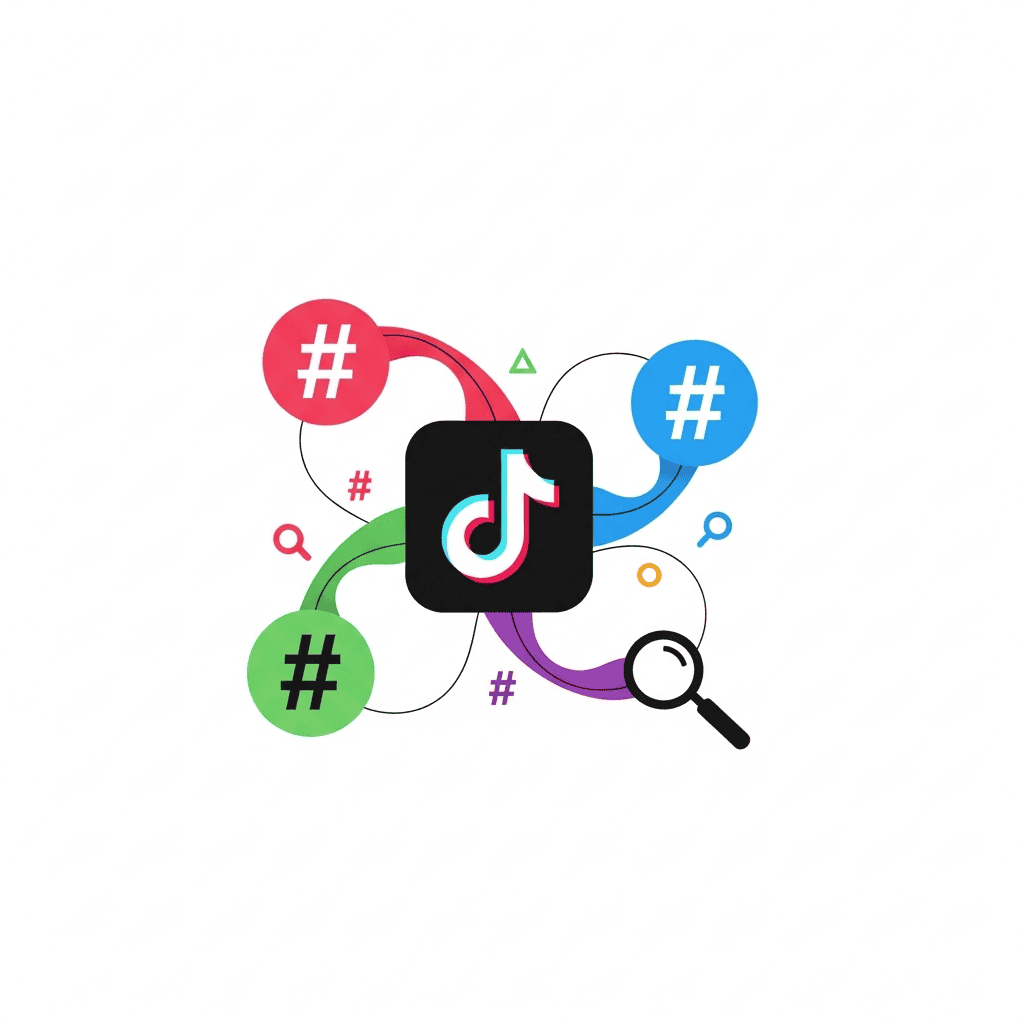
TikTok Shop autocomplete doesn't exist in isolation. The platform's unique culture means trending sounds and hashtags create entirely new search patterns overnight.
Mining Sound-Based Keywords
When a sound goes viral, product searches follow. The “What I Ordered vs. What I Got” sound spawned thousands of searches for specific product comparisons. Monitor trending sounds and preemptively optimize listings for associated keywords.
Hashtag-to-Keyword Translation
Popular hashtags often become search queries: – #CleanGirlAesthetic → “clean girl aesthetic products” – #BookTok → “booktok recommendations” – #TikTokMadeMeBuyIt → “[product] tiktok made me buy it”
Layer these cultural keywords with your product terms for maximum discoverability. This strategy works especially well when combined with using Google Trends to find winning niches before they peak.
Deploying Keywords Across Your TikTok Shop Presence
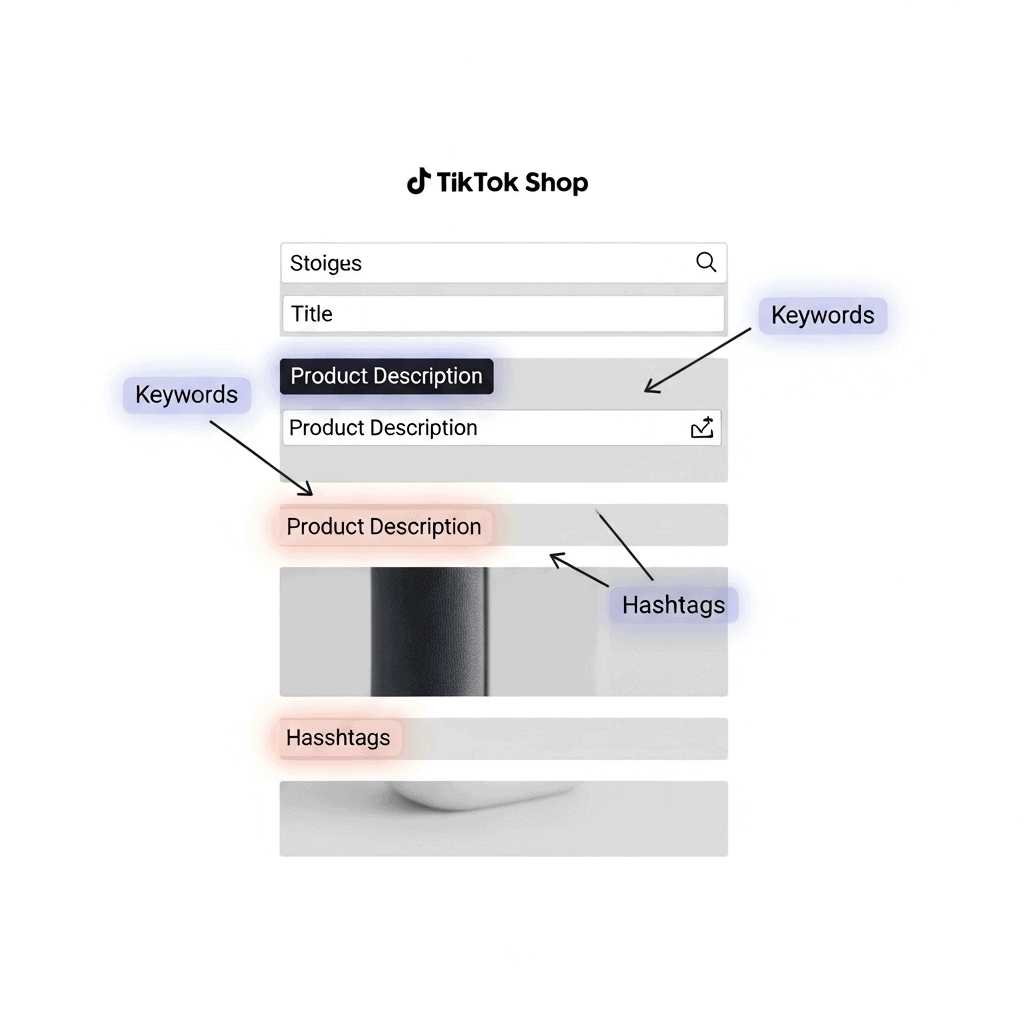
Collecting keywords means nothing without strategic deployment. Here's where to place your mined terms for maximum impact:
Product Titles: Lead with your highest-intent primary keyword. Keep titles under 80 characters.
Product Descriptions: Include 3-5 secondary keywords naturally. Avoid stuffing—TikTok's algorithm penalizes unnatural repetition.
Video Captions: Use trending keyword variations in your product demo content.
Hashtags: Mix evergreen product keywords with trending hashtag terms (5-7 total).
If your TikTok Shop account faces any compliance issues while implementing these strategies, our guide on TikTok Shop suspension recovery covers navigating reinstatement.
Measuring Keyword Performance and Iterating
Track which keywords actually drive sales, not just views. TikTok Shop's analytics show search terms that led to your listings—compare these against your mined keywords to identify winners.
Weekly review process: 1. Export search term performance from TikTok Shop analytics 2. Cross-reference with your keyword database 3. Double down on high-converting terms 4. Remove or replace underperformers 5. Mine new autocomplete suggestions for emerging trends
This data-driven iteration separates sellers who scale from those who stagnate. For comprehensive product validation beyond keywords, explore the complete guide to finding winning dropshipping products in 2026.
Turn Keyword Intelligence Into Sales
TikTok Shop autocomplete keyword mining transforms guesswork into systematic product discovery. By extracting real buyer language directly from the platform, you position products exactly where purchase-intent searches happen.
The sellers dominating TikTok Shop in 2026 aren't lucky—they're methodical. They mine autocomplete weekly, organize findings strategically, and deploy keywords across every touchpoint.
Your next steps: 1. Select 5 seed keywords for your top product categories 2. Run the alphabet soup method this week 3. Build your keyword database with intent classifications 4. Update product listings with high-intent terms 5. Schedule weekly mining sessions to capture emerging trends
Ready to find products that match buyer demand? Start your free Dropified trial and connect keyword intelligence directly to profitable product sourcing. Import winning products with one click and build a TikTok Shop store optimized for how buyers actually search.
✨ Want an AI Summary of this article?